

A futon sofa and bed is one of the simplest answers to a very common problem in a small home: how to have a comfortable sofa and a proper place to sleep without giving over a whole room to either one. By day it is a sofa you can sit on, read on and relax on. By night it converts into a bed that is ready for sleeping. Nothing needs to be dragged out of a cupboard, inflated, or assembled from separate parts. The same piece of furniture does both jobs, and the change between them takes only a few moments.
That simplicity is the reason the futon sofa and bed has lasted as a piece of furniture long after many space-saving fads have come and gone. It does not depend on a complicated mechanism, it does not need to be fixed to a wall, and it can be moved from room to room or from home to home. This guide explains what a futon sofa and bed really is, how the combination works in everyday life, the frame styles worth considering, the rooms where it shines, and the mistakes to avoid when you choose one. If you are weighing it up for a studio flat, a guest room, a home office or a living room that sometimes hosts overnight visitors, you will find what you need here.
What Is a Futon Sofa and Bed?
At its heart, a futon sofa and bed has two parts: a frame and a futon mattress. The frame is designed to sit in two positions. In the sofa position, the back of the frame is raised so the mattress forms a seat with a backrest. In the bed position, the frame lies flat so the same mattress forms a sleeping surface. The mattress itself is flexible enough to bend at the hinge of the frame without losing its shape, which is what makes the whole combination possible.
The idea comes from Japan, where a futon traditionally served as bedding that could be laid out for sleeping and put away during the day. The Western futon sofa and bed adapts that idea to a frame that stays in the room permanently. Instead of storing bedding away each morning, you simply fold the frame up into a sofa. The result keeps the spirit of the original idea, which is flexibility, while fitting the way most UK homes are actually used, where a living room or a spare room needs to serve more than one purpose.
It is worth being clear about what a futon sofa and bed is not. It is not a sofa with a hidden bed folded inside it, and it is not a mattress that happens to sit on a sofa frame. The mattress is the seating and the sleeping surface in both positions, which means its comfort matters twice over. A futon sofa and bed that is pleasant to sit on but miserable to sleep on, or comfortable to sleep on but lumpy to sit on, has missed the point. The best models get both jobs right, and that balance is the main thing to judge when you are shopping.
How the Combination Works Day to Night
Converting a futon sofa and bed from sofa to bed is usually a simple, manual process. On many frames you lift the seat section slightly, guide the backrest down until it lies flat, and then lower the seat into place beside it. On others you slide the seat forward and drop the backrest down behind it. Either way, there are no motors, no heavy folded frames to haul out, and no separate mattress to find. One person can usually manage the change alone, which matters if the bed will be converted often.
The daily rhythm of a futon sofa and bed is what makes it so practical. In the morning, you fold it back into a sofa, put the cushions back in place, and the room is a living space again. There is no bed taking up the floor all day, and no bedding left out on display unless you want it there. In the evening, you reverse the process, add a sheet and a duvet, and the bed is ready. For a guest room that is also used as an office or a hobby room, that rhythm is the whole point: the room keeps its daytime purpose and still sleeps someone properly at night.
Because the change is so straightforward, a futon sofa and bed also suits households where different people will do the converting. A guest can usually work it out without a demonstration, and there is little that can go wrong. The main thing to check before you buy is that you can operate the frame comfortably yourself. Try the movement in a showroom if you can, or check the instructions and reviews carefully if you are buying online. A frame that feels stiff or awkward on the first try is unlikely to feel better after months of daily use.
Rooms Where a Futon Sofa and Bed Works Best
Studio flats are the classic home for a futon sofa and bed. In a single room that has to be a living room, a bedroom and sometimes a workspace, a piece of furniture that is a sofa by day and a bed by night effectively doubles what the room can do. During the day the room looks and feels like a living room, with space to sit, eat and relax. At night it becomes a bedroom without any furniture needing to leave the room. For anyone living alone or as a couple in a studio, that flexibility can make a small space feel far more liveable.
Guest rooms and spare rooms are another natural fit. Many homes have a room that sits mostly empty, used only when visitors stay. A futon sofa and bed lets that room earn its keep the rest of the time as a reading room, a home office, a craft room or a place for teenagers to hang out. When guests arrive, the room converts in minutes. It also suits living rooms in smaller homes, where the main sofa can double as the guest bed, so visitors do not need a dedicated spare room at all.
Home offices benefit in a similar way. A futon sofa and bed gives you somewhere comfortable to sit during a break, a place to read through documents away from your desk, and a bed for an overnight guest without the office losing its purpose. It can also work well in a teenager’s bedroom, where floor space for friends, hobbies and study matters during the day, and in a holiday let or annexe, where flexible sleeping makes a small space sleep more people without feeling cramped.

Frame Styles Explained
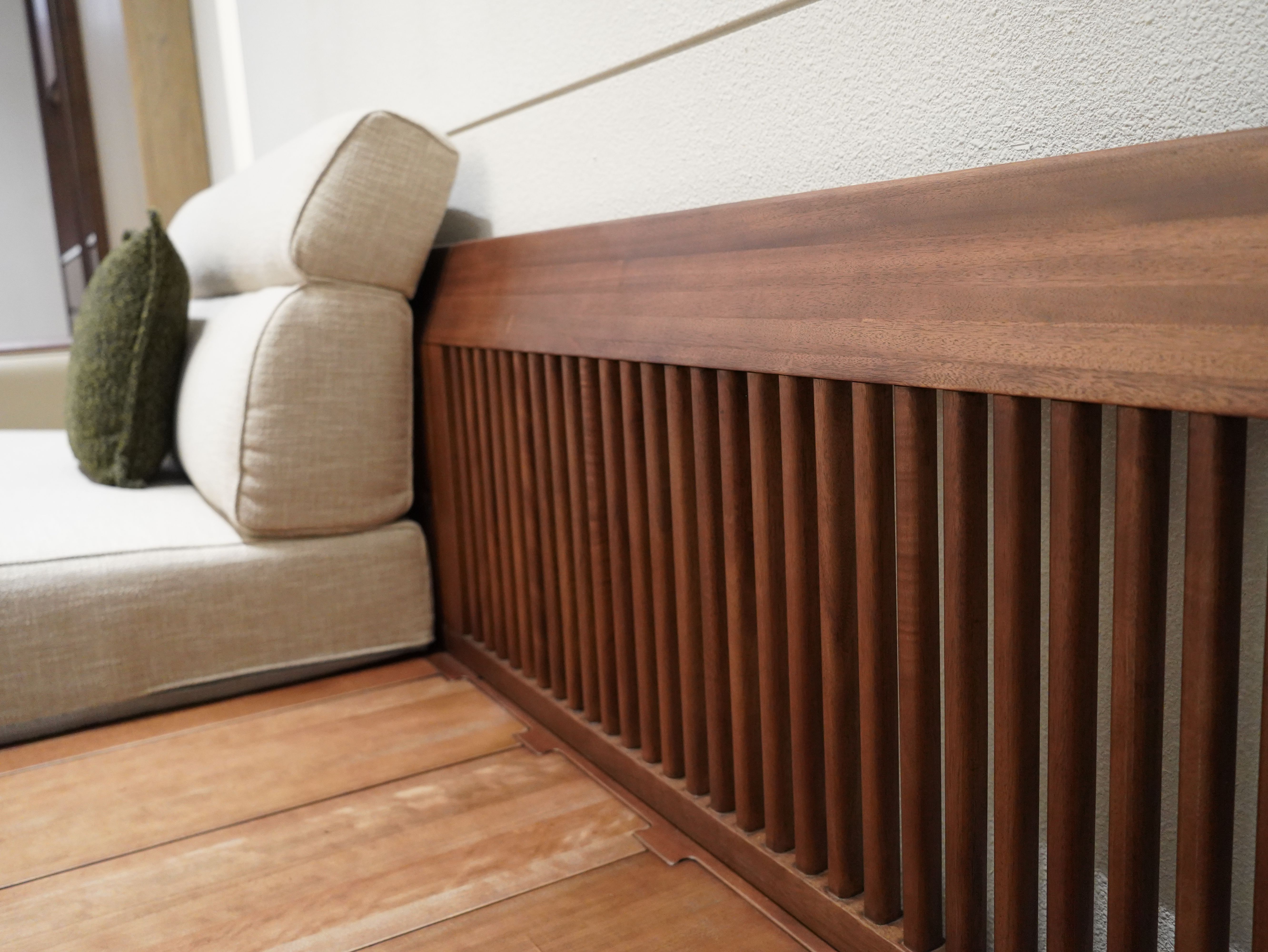
The frame is the part of a futon sofa and bed that decides how it looks, how it converts, and how long it lasts, so it deserves close attention. Wooden slatted frames are the most traditional style. They usually have a warm, natural look that suits a wide range of rooms, from a relaxed living room to a bedroom with wooden furniture. The slats support the mattress along its length and allow air to circulate underneath it, which helps keep the mattress fresh. Hardwood frames tend to feel sturdier and more substantial, while softer wood frames can be lighter and easier to move.
Metal frames offer a different character. They often look sleeker and more modern, with clean lines that suit a contemporary flat or a minimalist room. Metal frames can be very strong and are often lighter to move than a solid wooden frame. They may also fold in a slightly different way, so it is worth checking how the conversion feels on the particular model you are considering. Some people prefer the look of metal in a studio or a home office, while others find wood warmer and more inviting in a living room or a guest bedroom.
Beyond the material, frames differ in how they convert. Some use a bi-fold design, where the mattress folds in two, with the seat and the backrest forming the two halves of the bed. Others use a tri-fold design, where the mattress folds in three sections, which can make a more compact sofa and a slightly different sleeping surface. There are also frames with armrests and frames without them. Armless frames take up less width and can look more streamlined, while frames with arms feel more like a conventional sofa and give you somewhere to lean. Neither is better in itself; the right choice depends on your room and how you like to sit.
Choosing a Frame Style for Your Room
Start with the room, not the catalogue. A large wooden frame with generous arms can look wonderful in a spacious guest room but overwhelm a small studio, where a slimmer armless frame leaves more floor space and keeps the room feeling open. A dark wood finish can anchor a room with light walls and pale flooring, while a pale wood or a light metal frame can keep a small or north-facing room feeling bright. Think about the other furniture in the room too: a futon frame that echoes the wood tone or the metal finish of nearby pieces will look intentional rather than improvised.
Also think about who will use the futon sofa and bed and how often it will convert. A frame that will be folded up and down every day needs to feel smooth and solid, with hinges and joints that inspire confidence. A frame for occasional guest use can prioritise looks a little more, but it still needs to feel safe and stable when it is used as a bed. Check how the frame locks or holds its position in both modes, and whether it sits level on your floor. A frame that rocks or slides on a smooth floor will be annoying in both positions, and a simple rug or non-slip pads underneath can sometimes solve that.
Finally, consider the future. A futon sofa and bed is the kind of furniture that often moves with you from one home to another, or from one room to another as your needs change. A frame that comes apart for moving, or that is light enough to carry through a doorway without a struggle, is a genuine advantage. Ask about assembly, about whether spare parts such as slats or fixings are available, and about how the frame is finished, since a finish that chips or peels easily will show wear quickly on a piece that is handled every day.
Sitting Comfort by Day
A futon sofa and bed has to work as a sofa first, because that is how it will spend most of its hours. Sit on it properly before you judge it. The seat should feel supportive rather than sagging, and the backrest should be high enough and firm enough to lean against comfortably for a long evening. Many futon sofas feel best with a few scatter cushions added, which support your lower back and make the seating feel more like a conventional sofa. A throw draped over the back can also soften the look and make the seat more inviting.
The depth of the seat matters for sitting comfort. A seat that is too deep can leave shorter sitters perched on the edge with their feet dangling, while a seat that is too shallow can feel cramped for taller sitters. Because a futon mattress is a single flexible surface, its feel as a seat depends on both the mattress and the frame beneath it. Slats that are well spaced support the mattress evenly, while slats that are too far apart can let the mattress dip between them. If you can, sit on the exact model you plan to buy, in the sofa position, for more than a quick moment.
Sleeping Comfort by Night
Sleeping comfort on a futon sofa and bed depends on the same mattress that you sit on, which is why the mattress deserves as much attention as the frame. In the bed position, the mattress should lie flat without a pronounced ridge or dip where it folds. The fold itself is unavoidable, since the mattress has to bend, but on a well-made futon it should be gentle rather than a hard crease that you feel all night. Lying on it in the bed position, if you have the chance, tells you more than any description can.
Bedding makes a real difference to how a futon bed feels. A fitted sheet that stays in place, a duvet that suits the season, and pillows that suit your sleeping position all help the bed feel like a proper bed rather than a makeshift arrangement. Some people add a thin topper for extra softness, especially if the futon will be slept on every night. Others prefer the firmer, more supportive feel of a futon on its own. There is no right answer; it depends on your body and your preferences, and experimenting with bedding is an easy way to improve comfort without changing the furniture.
It is also worth being honest about nightly versus occasional use. A futon sofa and bed can absolutely work for nightly sleeping, especially a well-made one with a good mattress, but it will feel different from a permanent bed with a deep mattress on a fixed base. For occasional guests and for flexible living, it is an excellent compromise. For nightly use, prioritise the mattress and the frame quality above all else, and be prepared to invest a little more care in bedding and maintenance to keep it comfortable over time.
Styling a Futon Sofa and Bed
Styling is where a futon sofa and bed stops looking like a compromise and starts looking like a deliberate choice. In sofa mode, treat it like any other sofa: add cushions in colours that suit the room, drape a throw over one arm, and place a side table and a lamp nearby so the seating area feels finished. A rug in front of the sofa anchors the space and stops the room feeling like a bedroom that happens to have a sofa in it. When guests stay, the same cushions can move to the bed as extra pillows, and the throw becomes an extra layer on a cool night.
Storage is the other half of good styling. Spare bedding needs a home that is close at hand but out of sight during the day, otherwise the room quickly looks cluttered. A storage ottoman, a basket beside the sofa, or a dedicated shelf in a nearby wardrobe all work well. If you are planning the room as a whole, our fitted wardrobes guide explains how built-in storage can keep spare bedding, pillows and seasonal items tidy in a bedroom or a guest room, so the futon sofa and bed itself never has to double as a storage dump.
Colour and texture also help a futon sofa and bed blend into a room. A plain, neutral mattress cover is the most flexible choice, because you can change the look completely with different cushion covers and throws as the seasons change. A patterned cover can be a feature in itself, but it is harder to live with if you redecorate. If the futon will be the main sofa in a living room, choose a cover that can be removed and washed, since a sofa that is also a bed gets more wear than a sofa that is only sat on.

Futon Sofa and Bed or Murphy Bed?
A futon sofa and bed and a Murphy bed both solve the same problem, which is making one room do two jobs, but they solve it in different ways. A Murphy bed folds up against the wall and disappears into a cabinet, freeing the floor completely during the day. A futon sofa and bed stays in the room as a sofa, so the floor is never completely free, but the room always has somewhere comfortable to sit. If your priority is maximum daytime floor space, a Murphy bed may suit you better, and our Murphy bed guide explains how fold-down beds work, what to check before you buy, and how to install one safely.
If your priority is having a proper sofa during the day without needing a separate seating area, the futon sofa and bed has the edge. It is also usually simpler to install, since it does not need to be fixed to a wall, and easier to move to another room or another home. It suits renters particularly well, since there is no wall fixing to negotiate with a landlord and no installation to undo when you move. The choice really comes down to which daytime room you want: an empty floor, or a comfortable sofa.
Common Mistakes to Avoid
One common mistake is choosing a futon sofa and bed on looks alone without testing how it converts. A beautiful frame that is stiff, heavy or awkward to fold will quickly become a chore, and a bed that is a chore to make up is a bed that stops being used. Another mistake is ignoring the floor space needed in both positions. A futon sofa and bed needs room to lie flat as a bed, which extends further into the room than it does as a sofa, so measure the open bed footprint as well as the sofa footprint, including space to walk around it.
A further mistake is forgetting about bedding storage and about the mattress cover. A futon that cannot be kept clean, or whose bedding has nowhere to go during the day, will look untidy no matter how good the frame is. Finally, do not assume that any futon mattress will suit any frame. Mattresses and frames are designed to work together, and a mattress that is too soft, too stiff or the wrong shape for its frame will compromise both sitting and sleeping comfort. Buy the combination as a pair, or check carefully that a separate mattress is recommended for your frame.
Looking After a Futon Sofa and Bed
Day-to-day care is simple but worth doing regularly. Air the mattress when you can by leaving the bed made up with the bedding pulled back for a while, especially in a room that is not well ventilated. Vacuum the mattress surface occasionally, and wash or clean the cover according to its care instructions. Check the frame joints and hinges from time to time and tighten anything that feels loose, since a frame that is folded daily will naturally work its fixings loose over time.
Rotating or flipping the mattress, where the design allows, helps it wear evenly and prevents the fold area from becoming a permanent dip. Keep the area under and behind the frame free of dust, and avoid placing the futon against a damp wall, since trapped moisture is the enemy of any mattress. With that basic care, a well-made futon sofa and bed should give many years of service as both a sofa and a bed, which is a good return from a single piece of furniture.
Frequently Asked Questions
Is a futon sofa and bed comfortable to sleep on every night?
It can be, provided you choose a good mattress and a sturdy frame, and you are comfortable with a firmer sleeping surface than a deep conventional mattress. For nightly use, prioritise mattress quality and try the bed position before you buy if possible. For occasional guest use, most well-made futons are more than comfortable enough.
Can one person fold a futon sofa and bed alone?
In most cases, yes. Converting a futon sofa and bed is designed to be a one-person job, with no heavy frame to lift out and no separate mattress to handle. Check the conversion yourself before you buy, especially if the bed will be converted daily, since some frames feel smoother than others.
Does a futon sofa and bed need special bedding?
No special bedding is required, but bedding that fits the open bed size well will stay in place better and feel more comfortable. A fitted sheet, a duvet suited to the season, and pillows that suit your sleeping position are all you need, plus a spare set stored nearby for guests.
Is a futon sofa and bed suitable for a rented home?
Yes, it is one of the best space-saving choices for renters, because it needs no wall fixing and no installation. You can move it from room to room and take it with you when you move home, which is a real advantage over furniture that is fixed in place.
How do I keep a futon sofa and bed looking tidy?
Treat it like a sofa during the day, with cushions and a throw, and give spare bedding a dedicated storage spot out of sight. A removable, washable cover helps enormously, since a futon that doubles as a bed gets more wear than an ordinary sofa.
Conclusion
A futon sofa and bed earns its place in a home by doing two jobs well instead of one job brilliantly and the other badly. It gives you a sofa you actually want to sit on and a bed your guests will actually sleep well on, without demanding a spare room, a wall fixing, or a complicated mechanism. Choose the frame style that suits your room, judge the mattress in both positions, plan where the bedding will live, and measure the space in both modes. Do those things, and a futon sofa and bed will make a small home feel larger, a spare room feel useful, and a guest stay feel properly welcoming.