
A spare room that is also an office, a studio flat that needs to be a living room by day and a bedroom by night, a guest room that sits empty most of the year — these are exactly the rooms a Murphy bed was invented for. Also known as a wall bed, it folds up vertically into a cabinet or against the wall when you do not need it, freeing the floor for everything else, and folds down in seconds when it is time to sleep.
Murphy beds have come a long way from the rickety fold-away beds of old films. Modern versions use counterbalanced mechanisms, real mattresses and solid cabinetry, and many combine the bed with a desk, a sofa or shelving so the furniture earns its place twice over. This guide explains how they work, the types worth considering, what to check before you buy, and how to install and style one safely in a UK home.
What Is a Murphy Bed?
A Murphy bed is a bed that is hinged at one end to a wall-mounted frame or cabinet, so it can be stored upright and folded down for use. The design is named after William Lawrence Murphy, who patented the idea in the early 1900s. His problem was a familiar one: a small apartment with room for either a bed or a living space, but not both. The fold-down bed solved it, and the idea has never really gone away.
When folded up, the bed looks like a wardrobe, a bookcase or a plain cabinet. When folded down, it is a full bed with a proper mattress, supported by legs at the foot end and the wall frame at the head end. Most designs let you leave the bedding in place, so making the bed is a matter of folding it down, not rebuilding it every night.
How the Mechanism Works
The heart of a Murphy bed is its lifting mechanism, usually a set of pistons or springs that counterbalance the weight of the bed and mattress. This is what makes a heavy double bed feel light to lift and stops it dropping suddenly when you pull it down. Good mechanisms also lock the bed in both positions: securely upright when stored, and firmly down when in use.
There are two main mechanism styles. Piston mechanisms use gas struts similar to those on a car boot, giving a smooth, controlled motion and needing little maintenance. Spring mechanisms use heavy-duty springs and are common on larger or more traditional designs. Either can work well; what matters is that the mechanism is rated for the size and weight of your bed and mattress, and that it is fitted exactly as the manufacturer specifies.
Types of Murphy Beds
Vertical Murphy beds fold down from a tall cabinet, with the head of the bed against the wall. They suit rooms with enough ceiling height and are available in single, double and king sizes. Because the cabinet is tall, it can include shelving or cupboards above or beside the bed.
Horizontal Murphy beds fold down sideways from a long, low cabinet, with the long side of the bed against the wall. They need less ceiling height, which makes them a good fit for rooms with low ceilings, loft spaces or under a window. The trade-off is that they take up more wall width.
Murphy bed with a desk is one of the most popular combinations for home offices and student rooms. The desk stays level as the bed folds down, so your laptop, books and papers stay put — you simply clear the chair and pull the bed down over or in front of the desk area, depending on the design.
Murphy bed with a sofa pairs the bed with a sofa that stays in place or slides forward as the bed comes down. It is ideal for a living room that doubles as a guest room, because the room looks and works like a normal living room all day.
Cabinet beds are a smaller cousin: a compact cabinet that opens into a bed, often with a fold-out mattress rather than a full-depth one. They suit occasional guest use in very tight spaces, though they are generally less comfortable for nightly sleeping than a full Murphy bed.

Choosing the Right Size
Murphy beds are sold in standard UK mattress sizes, so start by choosing the mattress size you need. A single suits a child’s room or a solo guest space, a small double works for one adult comfortably or two at a squeeze, a double is the most common choice for couples and guest rooms, and a king suits a main bedroom where space allows. Remember that the cabinet will be larger than the mattress itself, so always check the manufacturer’s overall dimensions for both the open and closed positions.
Measure twice before ordering. You need the wall width and height for the cabinet, the floor space in front for the bed when it is down, and clearance to walk around it and open nearby doors and drawers. Also check the ceiling height for a vertical bed, the position of plug sockets, radiators and light switches, and whether the wall you plan to use is solid enough for the fixings. If you are choosing between bed types for a bedroom refresh, our rattan bed guide is a helpful comparison on bed frames, sizes and styling, even though a Murphy bed solves a different problem: it is about reclaiming floor space, not just choosing a frame.
Mattresses for Murphy Beds
Mattress choice matters more with a Murphy bed than with a standard bed, because the mattress is stored upright and must stay in place when folded. Most manufacturers specify a maximum mattress thickness and weight, and exceeding it can strain the mechanism or stop the bed closing properly. A mattress in the recommended range, usually a medium-depth foam, hybrid or sprung mattress, works best.
Look for a mattress that holds its shape well when stored vertically, and use the straps or retaining system supplied with the bed to keep it secured. Pillows and duvets can usually stay on the bed when it folds up, but bulky toppers and heavy blankets may need to be removed, so check this in the product details before you buy. Comfort is personal, so where possible, test the mattress type you plan to use, and remember that a good mattress matters just as much on a fold-down bed as on any other.
Safety and Installation
A Murphy bed is a heavy piece of furniture that is used daily, so installation is not a job to rush. The frame must be fixed to a solid wall or to wall studs with the fixings supplied or specified by the manufacturer. Plasterboard alone, without studs or proper anchors, is not a safe fixing surface for a full-size bed. If you are unsure what your wall is made of, or whether it can take the load, get a professional fitter or carpenter to survey it first.
Once installed, the bed should feel stable and level when down, with legs that sit firmly on the floor and a locking mechanism that holds it in both positions. Teach everyone who will use it how to open and close it: stand to one side, use the handle, guide it down steadily rather than letting it drop, and keep children clear of the mechanism while it moves. Check the fixings, pistons and legs periodically, and tighten anything that loosens over time. A well-installed Murphy bed, checked once or twice a year, is a safe and reliable piece of furniture.

Where a Murphy Bed Works Best
Studio flats and small apartments are the classic case. Folding the bed away during the day effectively doubles the usable floor, turning one room into a living room, workspace and bedroom in turn.
Home offices and guest rooms benefit because the room keeps its main purpose. A desk model lets you work all day and host a guest at night without a spare room sitting empty the rest of the year.
Children’s rooms and box rooms gain play or study space during the day, which matters enormously in a small room where floor space is the scarcest resource.
Holiday lets and annexes can sleep more people without dedicating a whole room to a bed that is only used at weekends.
A Murphy bed is less ideal where the bed will be folded up and down many times a day by someone with limited strength or mobility, or where the wall cannot safely take the fixings. In those cases, a high-quality sofa bed or a permanent small double may be a more practical choice.
Cost Factors
As with fitted furniture generally, what you pay is shaped by several factors rather than a single figure: the size of the bed, the mechanism quality, whether it includes a desk, sofa or shelving, the cabinet finish and materials, and whether professional installation is included. A basic single cabinet bed and a king-size model with an integrated desk and wardrobes are very different products, and comparing them on headline figures alone is misleading.
When comparing quotes, check what is included: the mattress, delivery, installation, wall fixings, and any guarantee on the mechanism. A longer guarantee on the moving parts is worth more than a small saving on a mechanism that will be used every day for years. Also ask about lead times, since many Murphy beds are made to order, and about returns if the cabinet does not fit your wall as expected.
Styling a Room With a Murphy Bed
The best Murphy bed rooms do not look like a compromise. When the bed is up, treat the cabinet as part of the room’s furniture: match its finish to other pieces, add artwork or shelving around it, and keep the floor area in front clear enough to fold the bed down without moving furniture every night. A rug that sits under the bed’s footprint can soften the room, but make sure it does not bunch under the legs or block the mechanism.
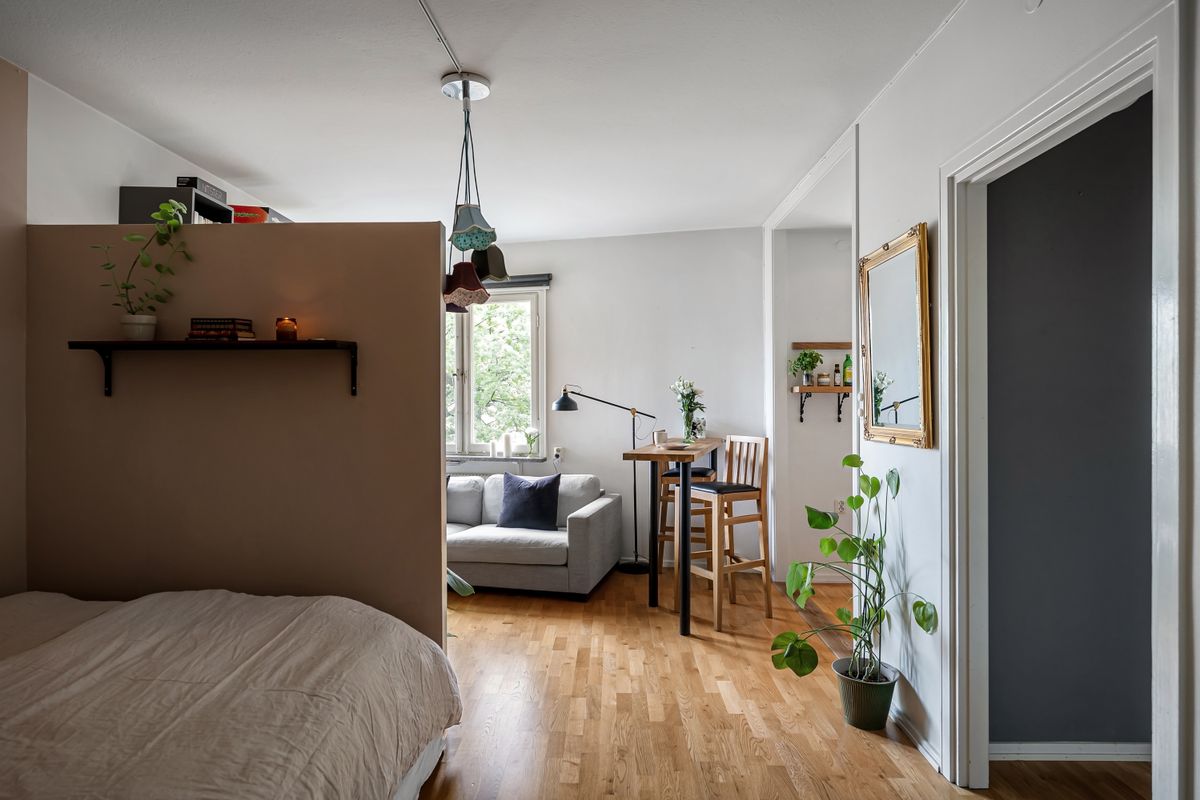
Colour and texture make a small multi-use room feel calm rather than cramped. Warm neutrals, layered fabrics and natural materials help a room shift between living and sleeping without feeling stark. Our guide to beige in the living room shows how layering neutral tones and textures creates warmth in a small space, and the same approach works beautifully around a Murphy bed: soft bedding, a textured throw, warm lighting and a few plants stop the room feeling like a storage unit with a sofa in it.
Common Mistakes to Avoid
- Guessing the wall: Never assume a wall is solid. Check its construction before ordering.
- Ignoring the open footprint: Measure the bed down, not just the cabinet up, including walking space around it.
- Choosing too thick a mattress: Over-thick or over-heavy mattresses strain the mechanism and may stop the bed closing.
- Blocking the fold-down zone: Furniture, rugs or toys in the way turn a ten-second job into a daily chore.
- Skipping the lock check: Test that the bed locks firmly in both positions before regular use.
- DIY installation on a weak wall: If in doubt, pay for professional fitting; it is cheaper than repairing a wall or a mechanism.
Looking After a Murphy Bed
Day-to-day care is simple. Keep the mechanism free of dust, wipe the cabinet with a damp cloth, and avoid overloading the shelves or desk attachments beyond their rated weight. Air the mattress regularly by leaving the bed down with bedding pulled back for a while, especially in rooms that are not well ventilated. If the bed starts to feel stiff or noisy, check the pistons and hinges before forcing it, and contact the supplier if the mechanism feels uneven or fails to lock.
Frequently Asked Questions
Can I sleep on a Murphy bed every night?
Yes, provided you choose a full-size model with a proper mattress within the manufacturer’s specifications. Cabinet beds with thin fold-out mattresses are better suited to occasional guest use.
Is a Murphy bed safe for children?
A professionally installed bed with a working lock is safe, but children should be supervised while it is being opened or closed, and the mechanism should be kept out of reach of small fingers.
Do I need planning permission?
No. A Murphy bed is furniture, not a structural change, though in a rented home you should get your landlord’s permission before fixing a heavy frame to the wall.
Can a Murphy bed be fitted to a plasterboard wall?
Only if the frame is fixed into the studs behind the plasterboard or with anchors rated for the load. Fixing into unsupported plasterboard alone is not safe.
Conclusion
A Murphy bed is one of the most effective ways to make a small home live larger. It gives you a real bed with a real mattress, without giving up the room to it all day. Choose the right size and type for your wall and ceiling, respect the mattress limits, have it fitted properly to a sound wall, and style the room so the cabinet feels like furniture rather than a secret. Done that way, a Murphy bed stops being a compromise and becomes the smartest piece of furniture in the house.