

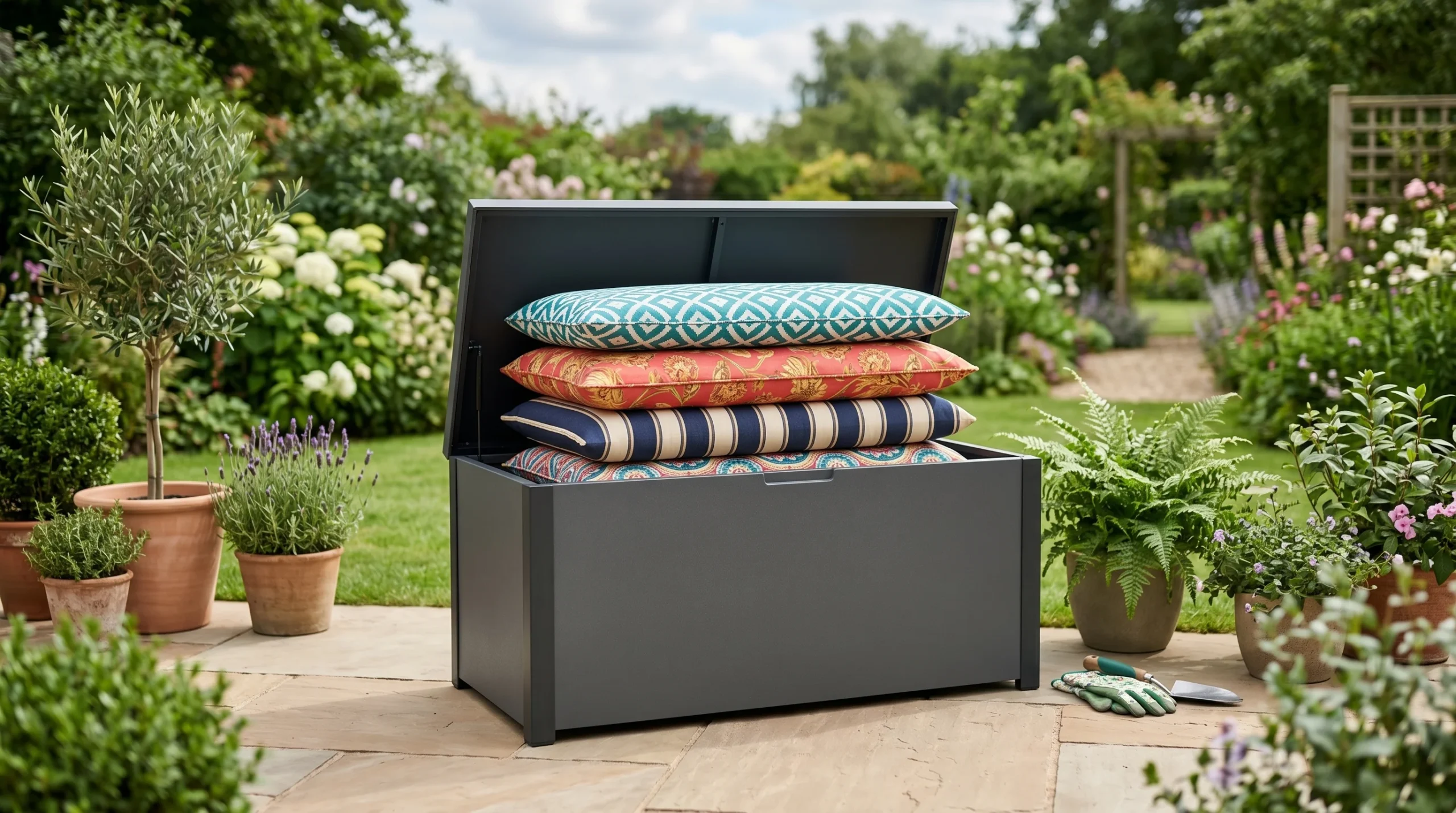
Storing outdoor furniture properly is something many people ignore until damage appears. When it comes to Storing Garden Cushions, small mistakes can lead to mold growth, bad odors, fabric fading, and permanent damage. Garden cushions are exposed to rain, dust, and sunlight throughout the year, so without proper care, they lose their comfort and appearance very quickly.
Many users search for storing outdoor cushions, storage garden cushions, and storing outdoor cushions for winter because they want simple ways to protect their investment. Whether you keep them in a shed, garage, or indoors, the goal is the same: keep them dry, clean, and safe for long-term use.
Understanding the Risks of Poor Cushion Storage
Before learning the methods of Storing Garden Cushions, it is important to understand what can go wrong when cushions are stored incorrectly.
Moisture is the biggest enemy. If cushions are stored while slightly damp, they quickly develop mold and mildew. This is one of the most common issues people face when searching for how to store outdoor cushions in a shed or storing outdoor cushions over winter.
Other risks include:
- Fabric fading due to improper covering
- Foam damage caused by compression
- Pest or insect infestation in storage areas
- Permanent odor caused by trapped moisture
These problems are avoidable if proper steps are followed.
How to Clean Garden Cushions Before Storage
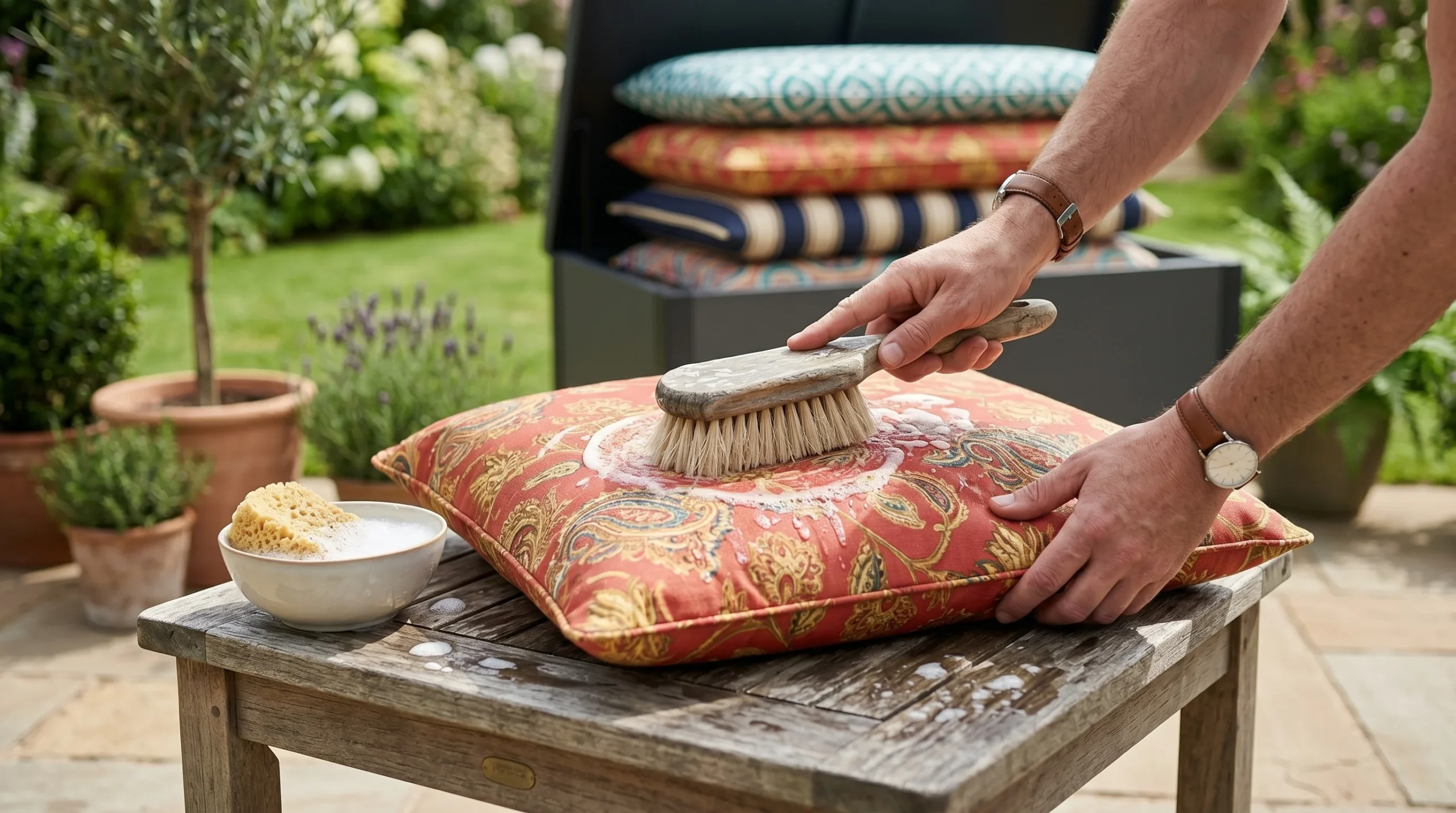
Cleaning is the most important step in Storing Garden Cushions, yet it is often ignored. Dirt and stains attract moisture and bacteria, which later cause mold.
Start by removing loose dust using a brush or vacuum. Then wash the cushions using mild detergent and water based on fabric type. Avoid harsh chemicals as they damage outdoor fabric.
After washing, drying is critical. Cushions must be completely dry before storing. Even slight moisture can lead to mold when storing outdoor cushions in winter or storing garden cushions in garage situations.
A useful tip is to leave cushions in sunlight for a few hours to ensure full dryness before storage.
Best Places for Storing Garden Cushions
Choosing the right location is essential for long-term protection. People often search how to store garden cushions in garage or storing outdoor cushions in shed because these are the most common storage spaces.
Storing Cushions in a Shed
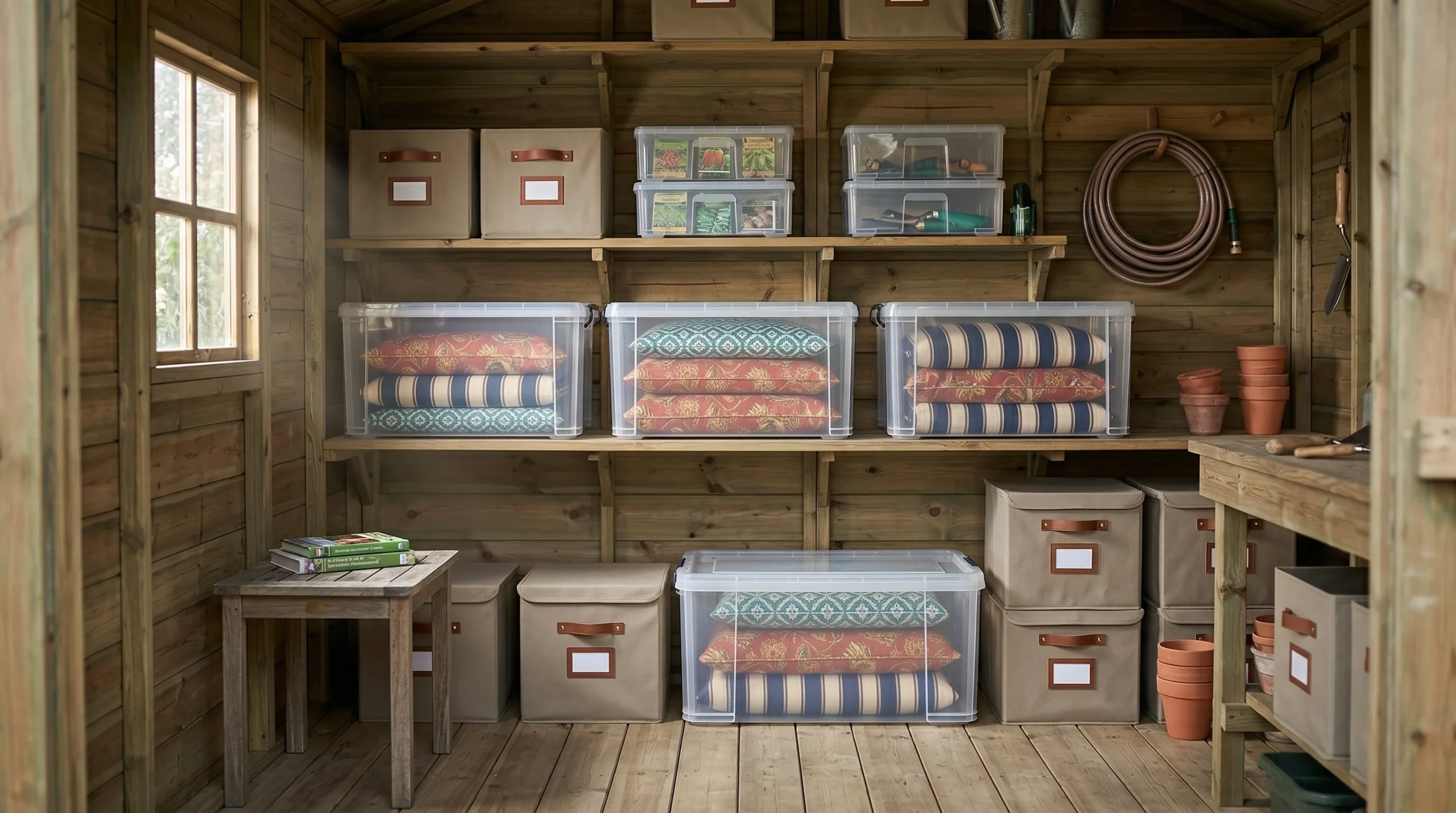
A shed is a popular choice for storing garden cushions in shed setups. It is convenient but can become humid. To make it safe, ensure ventilation and use waterproof boxes or bags. Avoid placing cushions directly on the floor.
Storing Cushions in a Garage
Garages are also widely used for storing outdoor cushions in garage environments. The main risk here is dust and temperature changes. Store cushions in sealed containers and keep them elevated.
Indoor Storage Options
If space allows, indoor storage is the safest option. Spare rooms, wardrobes, or under-bed storage can protect cushions from weather damage completely.
Seasonal Guide for Storing Garden Cushions
Seasonal care plays a major role in Storing Garden Cushions properly.
Winter Storage
During cold months, storing outdoor cushions for winter becomes essential. Rain, frost, and moisture can quickly damage fabric. Always clean, dry, and store cushions in waterproof containers before winter begins.
Rainy Season Protection
In humid or rainy weather, cushions should be stored in sealed bags or boxes. Moisture absorbers can help prevent dampness.
Summer Storage
In summer, UV rays can fade cushion colors. Even when not in use, keep cushions covered or stored away from direct sunlight.
Best Storage Methods for Garden Cushions
There are several effective methods for storing outdoor cushions safely.
Outdoor Storage Boxes
Waterproof storage boxes are one of the most reliable solutions. They protect against rain, dust, and pests. However, choose breathable designs to avoid trapped moisture.
Storage Bags
Fabric storage bags are useful for indoor use. They allow airflow and prevent odor buildup.
Vacuum Storage Bags
Vacuum bags can save space, but they are not always suitable for all cushion types. Over-compression may damage foam structure, so use carefully.
DIY Storage Ideas
Simple DIY storage solutions such as repurposed plastic containers or wooden boxes lined with waterproof sheets can also work well for budget-friendly storage.
How to Prevent Mold and Damp in Stored Cushions
One of the biggest concerns in storing outdoor cushions is mold prevention. Moisture control is the key.
Use silica gel packets or moisture absorbers inside storage boxes. Ensure airflow by slightly opening containers if stored indoors. Anti-mold sprays can also provide extra protection.
Never store cushions in airtight containers if there is any chance of moisture inside.
Common Mistakes When Storing Garden Cushions
Many people damage their cushions without realizing it. Avoid these common mistakes:
- Storing cushions while still damp
- Using non-breathable plastic bags
- Keeping cushions directly on concrete floors
- Over-stacking heavy items on cushions
- Ignoring seasonal storage needs
These mistakes are often responsible for mold and fabric damage.
How to Store Cushions in Small Spaces
Not everyone has a shed or garage, which makes small space storage important. For apartments or compact gardens, vertical storage or foldable furniture with storage space works best.
Balcony storage boxes and under-bench storage units are also excellent solutions for storing outdoor cushions in small spaces without damage.
How Long Can You Store Garden Cushions Safely
Garden cushions can be safely stored for several months if properly prepared. However, long-term storage requires occasional checks. Every few weeks, inspect for moisture buildup or odor.
Proper Storing Garden Cushions techniques can extend their lifespan significantly, keeping them usable for many seasons.
Advanced Cushion Protection Tips
For extra protection, consider using fabric protection sprays before storage. These create a water-resistant layer that reduces damage risk.
UV protective covers also help when cushions are stored near light sources. Rotating stored cushions occasionally ensures even pressure distribution and prevents shape deformation.
Frequently Asked Questions
Can you store outdoor cushions in a garage?
Yes, but they must be properly sealed and elevated to avoid dust and moisture.
How do you stop cushions from smelling in storage?
Ensure they are fully dry before storage and use moisture absorbers.
Should cushions be vacuum sealed?
Only if the cushion material allows compression without damage.
What is the safest place to store garden cushions?
Indoor storage is safest, followed by dry and ventilated sheds or garages.
Conclusion
Proper Storing Garden Cushions is essential to maintain their quality, comfort, and appearance for years. Whether you choose a shed, garage, or indoor space, the key factors are cleaning, drying, and moisture control. By following these structured methods, you can prevent mold, avoid damage, and keep your cushions in excellent condition for every season.





Leave a Reply