

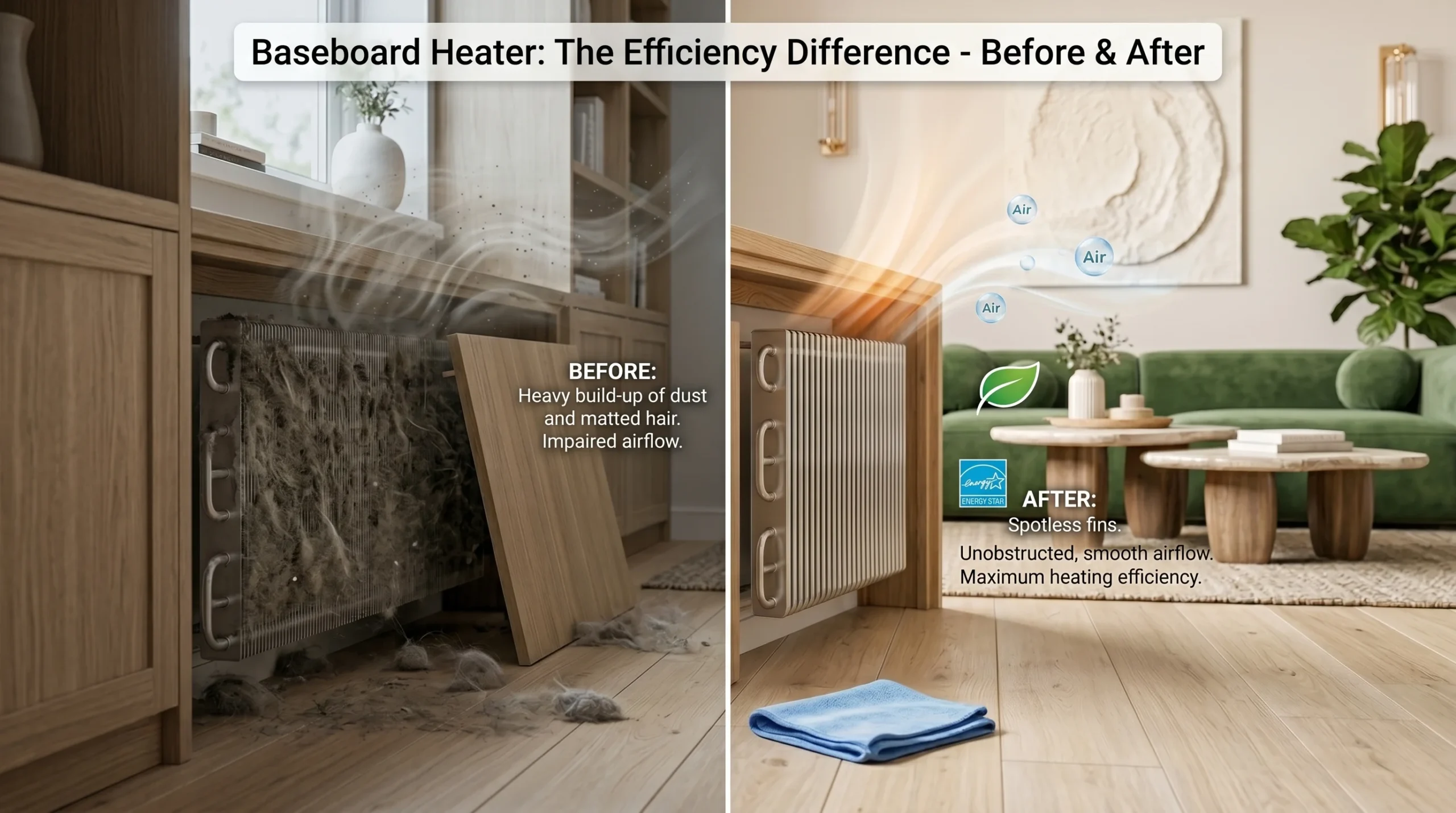
Baseboard heaters quietly keep many homes warm, but they are often forgotten when it comes to routine maintenance. Over time, dust, pet hair, and debris collect inside the heater covers and around the heater fins. This buildup can affect heating efficiency, reduce airflow, and even create a burning smell when the system is turned on.
If you have been wondering how to clean baseboard heaters, the good news is that the process is simple and does not require advanced skills. With a few household tools and a little patience, you can improve indoor air quality, help your heating system perform better, and extend the lifespan of your unit.
Why Cleaning Baseboard Heaters Is More Important Than You Think
Cleaning baseboard heaters is about more than appearance. It directly impacts comfort, efficiency, and safety.
Improve Heating Efficiency
Dust trapped around heating elements and aluminum fins can restrict airflow. When airflow is blocked, the heater has to work harder to warm the room. Regular baseboard heater maintenance allows heat to circulate properly and helps improve heater performance.
Reduce Energy Consumption
Many homeowners ask whether dirty heaters use more electricity. The answer is yes. Dust buildup can reduce efficiency and increase energy consumption. Clean systems distribute heat more effectively and may help reduce heating costs over time.
Eliminate Burning Dust Smells
A common complaint during colder months is a strange odor when heaters are first switched on. In many cases, the smell comes from accumulated dust burning off the heating elements. Cleaning baseboard heaters can eliminate this issue.
Improve Indoor Air Quality
Dust allergens, pet dander, and debris trapped inside baseboard heat systems can circulate throughout the home. Routine cleaning can improve indoor air quality and create a healthier living environment.
Extend the Lifespan of Your Heater
Keeping your heating system clean reduces strain on components and may help prevent unnecessary wear.
What Type of Baseboard Heater Do You Have?
Before learning how to clean baseboard heaters, identify the type installed in your home.
Electric Baseboard Heaters
Electric baseboard heaters use electric resistance heating to generate warmth. They contain heating elements surrounded by metal fins that help distribute heat through convection.
Hydronic Baseboard Heaters
Hydronic baseboard heaters use hot water flowing through copper pipes. The heat transfers through the fins and warms the surrounding air.
Why Identifying the Type Matters
Although the cleaning process is similar, hydronic systems require attention around hot water pipes, while electric units demand extra care around electrical components.
Tools and Supplies You’ll Need
Gather these supplies before getting started:
- Vacuum cleaner with brush attachment
- Soft bristle brush
- Microfiber cloth
- Screwdriver
- Compressed air
- Mild soap and water
- Gloves
- Dust mask
- Safety glasses
Having the right tools makes it easier to clean inside a baseboard heater thoroughly.
Essential Safety Precautions Before You Begin
Safety should always come first.
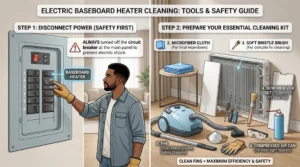
Turn Off the Power Supply
For electric baseboard heaters, switch off the circuit breaker connected to the unit.
Allow the Heater to Cool
Never clean a heater while it is hot. Wait until all components are completely cool.
Protect Yourself From Dust
Wear gloves and a dust mask, especially if dust allergens or pet dander are present.
How to Clean Baseboard Heaters Step by Step
If you are searching for how to clean baseboard heaters, follow these practical steps.
Step 1: Turn Off the Heater
Disconnect the power supply or shut down the heating system completely.
Step 2: Remove the Front Cover
Use a screwdriver if necessary to remove the heater cover carefully. Many models simply lift off without tools.
Step 3: Vacuum Loose Dust and Debris
Use a vacuum cleaner with a brush attachment to remove loose dust, pet hair, and dirt from the interior.
Can you vacuum baseboard heaters? Yes. In fact, it is one of the safest and most effective methods.
Step 4: Clean the Heater Fins Carefully
Use a soft brush to clean baseboard heater fins. Move gently to avoid bending the delicate aluminum fins.
Compressed air can help remove stubborn debris from tight spaces.
Step 5: Wipe Interior Surfaces
Use a microfiber cloth to wipe the inside surfaces. Avoid excessive moisture around electrical components.
Step 6: Clean the Exterior Cover
Wash the cover using mild soap and water. Dry it thoroughly before reinstallation.
Step 7: Reassemble the Heater
Replace the heater covers securely.
Step 8: Restore Power and Test Performance
Turn the power back on and test the heater to ensure proper operation.
How to Clean Electric Baseboard Heaters
Many homeowners specifically search for how to clean electric baseboard heaters.
Electric units require extra caution.
What Makes Electric Units Different?
The heating elements carry electricity and should never come into contact with excessive moisture.
Moisture Safety Tips
Use only slightly damp cloths and ensure all parts are dry before restoring power.
Common Mistakes to Avoid
- Using too much water
- Forgetting to switch off the breaker
- Scrubbing heating elements aggressively
- Reassembling before components dry completely
How to Clean Hydronic Baseboard Heaters
If your system uses hot water heating, the process is slightly different.
Extra Precautions
Allow pipes and heating tubes to cool before cleaning.
Cleaning Around Pipes and Fins
Vacuum debris carefully and wipe around copper pipes without applying excessive force.
When to Seek Professional Help
If you notice water leaks, corrosion, or persistent heating problems, contact a qualified technician.
Common Mistakes That Can Damage Your Baseboard Heater
Avoid these errors during baseboard heater cleaning:
- Cleaning while the heater is still hot
- Using harsh chemical cleaners
- Bending heater fins
- Forgetting to disconnect power
- Ignoring pet hair buildup
- Allowing moisture near electrical components
These simple precautions can protect your investment.
How Often Should You Clean Baseboard Heaters?
Many people ask how often you should clean baseboard heaters.
Homes Without Pets
An annual cleaning before winter is usually sufficient.
Homes With Pets
Pet owners should inspect and clean units every three to six months. Cleaning pet hair from baseboard heaters prevents airflow restrictions.
Allergy Sensitive Households
Frequent cleaning helps reduce allergens and improve indoor air quality.
Seasonal Maintenance
Spring and fall are ideal times for annual heater maintenance.
Warning Signs Your Baseboard Heater Needs Cleaning
Watch for these indicators:
- Burning smell from baseboard heaters
- Visible dust buildup
- Reduced heat output
- Strange noises
- Uneven heating throughout the room
These signs often suggest it is time for maintenance.
Can Dirty Baseboard Heaters Increase Your Energy Bills?
Yes.
Dust accumulation can block airflow and reduce heating efficiency. As a result, the unit may operate longer to maintain comfortable temperatures.
Learning how to clean baseboard heaters not only improves comfort but may also help lower operating costs and support energy efficiency.
Preventing Dust Buildup in the Future
Preventive care saves time and effort.
- Vacuum nearby flooring regularly
- Dust heater covers monthly
- Reduce pet hair accumulation
- Schedule seasonal inspections
- Keep furniture from blocking airflow
- Monitor high dust areas more frequently
Simple habits can keep your heating system cleaner for longer.
Frequently Asked Questions
Is it safe to use water on electric baseboard heaters?
Use only a lightly damp cloth and avoid direct contact with electrical parts.
Can dirty baseboard heaters trigger allergies?
Yes. Dust allergens and pet dander trapped inside heaters can circulate through the home.
Do dirty heaters use more electricity?
Restricted airflow can reduce efficiency and increase energy consumption.
Should I remove the cover before cleaning?
Removing the cover allows better access to dust and debris hidden inside.
What happens if you never clean baseboard heaters?
Neglected heaters may experience reduced performance, unpleasant odors, and unnecessary strain on components.
Conclusion
Knowing how to clean baseboard heaters is an important part of home maintenance. A little effort can improve heating efficiency, reduce odors, support indoor air quality, and help extend the life of your heating system.
Whether you have electric baseboard heaters or hydronic baseboard heaters, routine care keeps them working effectively when you need them most. By following these steps and maintaining a regular cleaning schedule, you can enjoy a warmer, healthier, and more energy-efficient home throughout the year.




Leave a Reply