

Taking care of your house is not just about cleaning or fixing things when they break. Proper home maintenance is a continuous process that helps you avoid costly repairs, improve safety, and keep your property in top condition. Many homeowners ignore small issues until they turn into expensive problems. This guide solves that by giving you a complete system that includes checklists, budgeting tips, and expert advice.
If you want to learn how to maintain your home year-round, reduce expenses, and create a smart home Repair schedule, this guide will walk you through every step simply and practically.
What is Home Repair
Home maintenance refers to the regular tasks and inspections needed to keep a house safe, functional, and efficient. It includes everything from cleaning gutters to checking plumbing systems and maintaining heating and cooling units.
There are two main types of maintenance. Preventive maintenance focuses on stopping problems before they occur. Corrective maintenance deals with fixing issues after they appear. A smart homeowner focuses more on preventive home- maintenance because it saves money and avoids stress.
Understanding the basics of home upkeep helps you stay ahead of problems and maintain your property value over time.
Why Home Repair is Important
Regular maintenance plays a crucial role in protecting your investment. A well-maintained home not only looks better but also functions more efficiently.
One major benefit is cost savings. Small repairs are always cheaper than major renovations. For example, fixing a minor leak early can prevent serious water damage later.
Safety is another important factor. Routine checks of electrical systems, gas lines, and smoke detectors reduce the risk of accidents.
Maintenance also increases property value. Buyers are more interested in homes that are properly maintained. In addition, insurance companies often favor homes that follow a proper home -maintenance checklist.
Monthly Home Maintenance Checklist
A monthly routine keeps your home in control and prevents surprises.
Here is a simple home maintenance checklist you can follow:
These small tasks form the foundation of a strong home Repair plan and help you avoid costly issues in the future.
Seasonal Home Maintenance Checklist
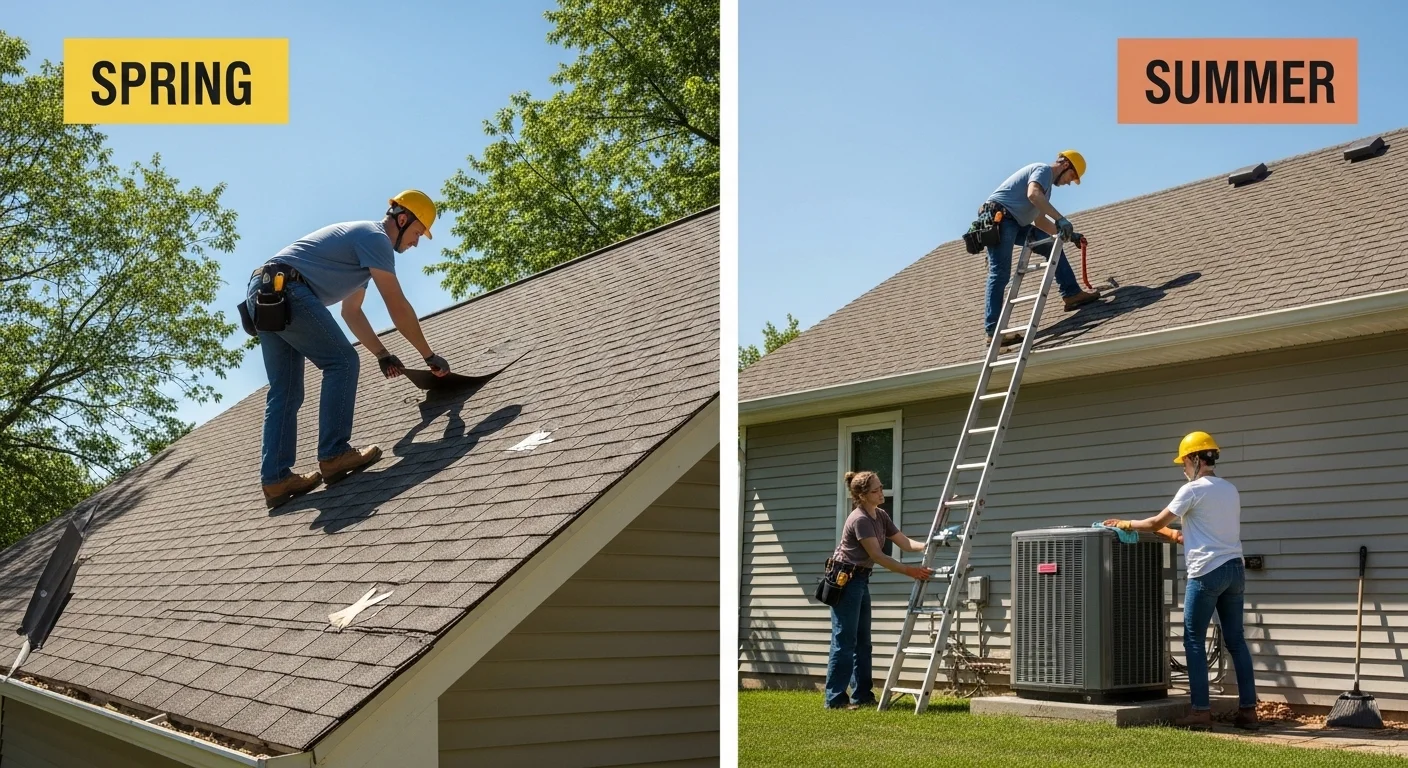
Spring Home -Maintenance Checklist
Spring is the time to inspect damage caused by winter.
- Clean gutters and downspouts
- Inspect the roof for cracks
- Check exterior walls and paint
- Service outdoor plumbing
Summer Home Maintenance Tasks
Summer focuses on cooling and outdoor areas.
- Service air conditioning system
- Inspect pest issues
- Maintain the garden and lawn
- Clean outdoor spaces
Autumn Home Maintenance Checklist
Prepare your home for colder months.
- Inspect the heating system
- Seal gaps and cracks
- Clean gutters again
- Check insulation
Winter Home Repair Checklist
Winter requires protection and safety.
- Insulate pipes
- Check the heating system regularly
- Prevent ice buildup
- Monitor indoor humidity
Following a seasonal home maintenance checklist ensures your house stays protected throughout the year.
System-Based Home Maintenance
HVAC Maintenance
Heating and cooling systems require regular servicing. Clean filters, check airflow, and schedule professional inspections to maintain efficiency.
Plumbing MaintenanceInspect pipes, fix leaks, and ensure proper water pressure. Plumbing maintenance prevents water damage and reduces utility bills.
Electrical System Maintenance
Check wiring, outlets, and circuit breakers. Faulty electrical systems can cause serious safety risks.
Roof and Gutter Maintenance
Regular roof maintenance and gutter cleaning prevent water damage and structural issues.
Insulation and Energy Efficiency
Good insulation helps reduce energy costs. Check walls, ceilings, and windows for heat loss.
Home Maintenance Costs and Budgeting
Understanding the cost of home Repair helps you plan better. On average, homeowners spend a small percentage of their property value each year on maintenance.
You should create a home -maintenance budget that includes:
- Routine maintenance costs
- Emergency repair fund
- Seasonal expenses
DIY vs professional maintenance also affects costs. Simple tasks can be handled on your own, but complex repairs require experts. A balanced approach saves both time and money.
DIY vs Professional Maintenance
Many homeowners prefer DIY maintenance to save money. Tasks like cleaning gutters, painting walls, and basic inspections are easy to handle. However, some situations require professional help. Electrical repairs, major plumbing issues, and HVAC servicing should be done by experts to ensure safety.
Knowing when to do it yourself and when to hire a professional is a key part of a successful home -maintenance strategy.
Essential Home Maintenance Tools
Every homeowner should have a basic toolkit.
Important tools include:
- Hammer and screwdrivers
- Adjustable wrench
- Measuring tape
- Ladder
- Safety gloves and goggles
Modern homeowners can also use smart tools and apps to track their home maintenance schedule and receive reminders for important tasks.

Smart and Digital Home Repair
Technology has made maintenance easier than ever. Smart home devices can detect leaks, monitor energy usage, and alert you to problems in real time. Digital apps help you create a home maintenance checklist, track tasks, and manage your maintenance plan efficiently. This modern approach improves convenience and reduces risks.
Common Home Maintenance Mistakes to Avoid
Many homeowners make simple mistakes that lead to bigger problems.
Common mistakes include:
- Ignoring small repairs
- Skipping seasonal inspections
- Using poor-quality materials
- Not following a proper schedule
Avoiding these mistakes ensures long-term safety and efficiency.
Signs Your Home Needs Immediate Maintenance
Some warning signs should never be ignored.
Watch out for:
- Water leaks or damp walls
- Cracks in walls or ceilings
- Flickering lights
- Unusual noises from HVAC systems
These signs indicate that immediate action is needed to prevent serious damage.
Home Repair for Different Property Types
Different properties require different maintenance strategies.
Apartments need less exterior maintenance but require attention to plumbing and electrical systems.
Villas and houses require full maintenance, including roofs, gardens, and outdoor spaces.
Rental properties require regular inspections to maintain value and ensure tenant safety. Eco-Friendly
Home Maintenance Tips
Sustainable practices are becoming more important.
You can improve your home by:
- Using energy-efficient appliances
- Fixing water leaks quickly
- Using eco-friendly materials
- Improving insulation
Eco-friendly maintenance reduces costs and benefits the environment.
Final Tips for Efficient Home Maintenance
Consistency is the key to success. Create a realistic schedule and follow it regularly. Focus on preventive maintenance instead of waiting for problems to occur. Use tools, checklists, and smart technology to stay organized. A well-planned approach to home maintenance not only saves money but also provides peace of mind and long-term comfort.
Conclusion
Maintaining your home does not have to be complicated. With the right checklist, tools, and strategy, you can easily manage your property and avoid expensive repairs. By following this complete guide, you can build a strong maintenance routine, improve your home’s value, and ensure safety for years to come.




Leave a Reply