

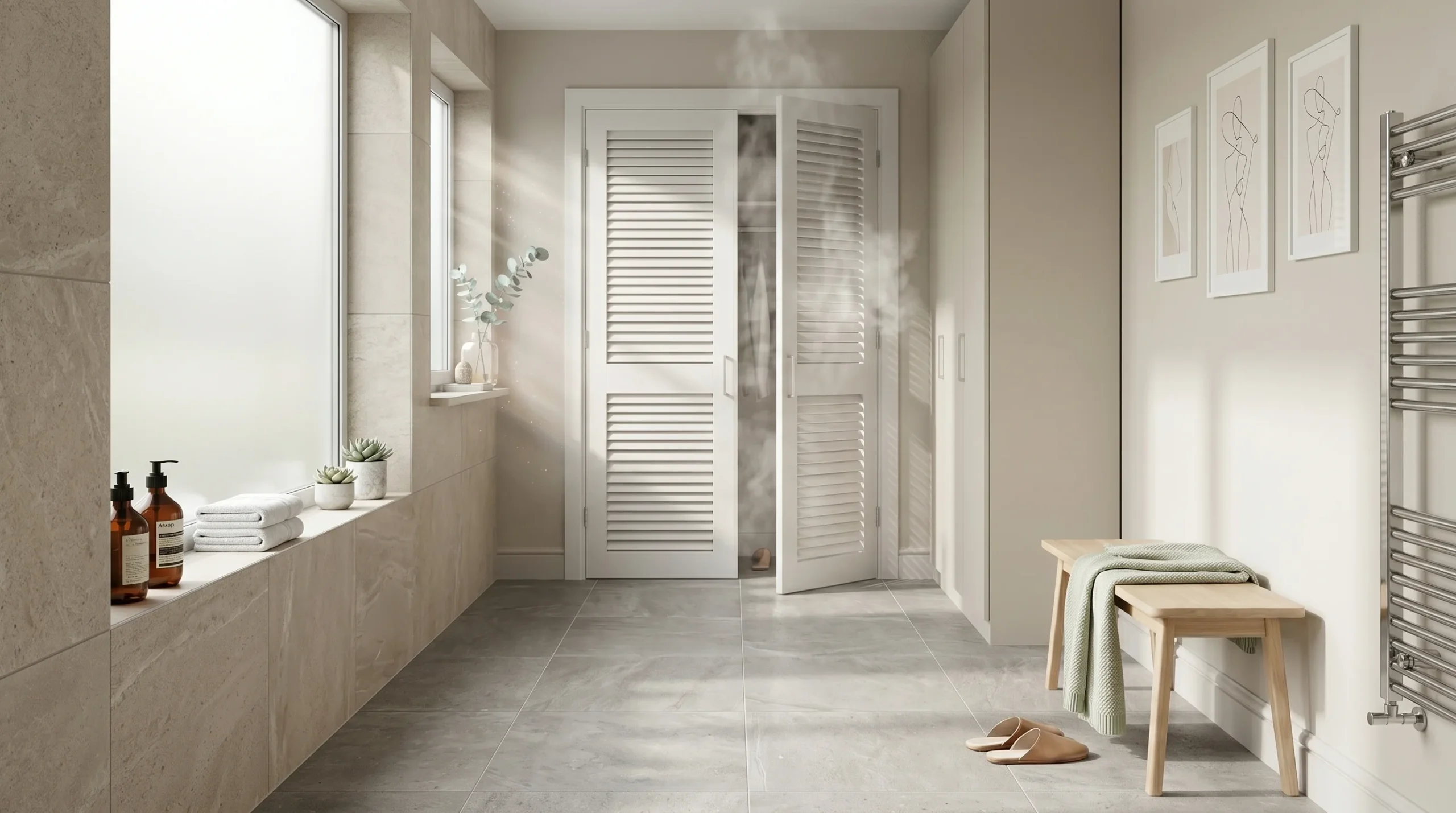
In modern architecture and interior planning, airflow and comfort play a major role in door design. One solution that continues to remain relevant is louvers on doors. These designs are not just about appearance but also about improving air movement inside enclosed spaces. Unlike solid doors, this design allows controlled ventilation while still maintaining a degree of separation between rooms. Because of this balance, louvers on doors are widely used in homes, offices, and utility areas where airflow is important, but complete openness is not required.
Today, designers prefer this structure because it solves practical issues like heat buildup, humidity, and poor ventilation without relying on mechanical systems.
Understanding Louvers on Doors
To understand the concept clearly, louvers on doors refer to a series of angled slats fitted into a door panel. These slats are designed in a way that air can pass through them while direct visibility is partially blocked.
In simple terms, they act like controlled ventilation channels built into a door. This makes them different from regular doors, which are designed mainly for separation rather than airflow.
There are also decorative versions known as false louvers that imitate the look but do not allow air passage. On the other hand, functional versions are designed specifically for ventilation purposes.
A common search query is what are louver doors, and the answer is that they are specialized doors designed to maintain airflow between connected spaces while preserving privacy to some extent.
Purpose of Louvers in Door Design
The main reason behind using louvers on doors is to maintain continuous air movement inside rooms. This becomes especially useful in areas where ventilation is naturally limited.
Bathrooms and kitchens benefit the most because moisture and odor tend to accumulate quickly. By allowing air to circulate, these doors help reduce dampness and improve overall freshness.
Another important function is temperature regulation. When air moves freely between spaces, heat does not get trapped, which helps maintain a more comfortable indoor environment.
In many modern homes, louvers on doors are also used as an energy-saving feature because they reduce dependence on fans or cooling systems.
Working Mechanism of Louver Doors
The functioning of louvers on doors is based on a simple airflow principle. The slats are positioned at a specific angle that allows air to pass through but restricts direct sight lines.
When air pressure builds in one area, it naturally moves toward areas of lower pressure. The angled slats guide this movement smoothly, creating natural ventilation across connected rooms.
The design of the slats plays a critical role. Narrow spacing limits visibility but reduces airflow, while wider spacing increases ventilation but reduces privacy. This balance is what makes the design both functional and practical.
Main Types of Louver Doors
Fixed Louver Doors
These are permanently fixed slats that provide consistent airflow. They are commonly installed in closets, bathrooms, and storage areas.
Adjustable Louver Doors
These allow users to change the angle of the slats depending on ventilation needs. This adds flexibility in controlling airflow.
Functional True Louvers
True louvers on doors are designed purely for ventilation purposes and are often used in technical or commercial environments where airflow is essential.
Decorative False Louvers
These are visually similar to functional ones but do not allow air passage. They are mainly used in interior styling where appearance is the priority.
Materials Used in Louver Door Construction
Different materials are used depending on durability and environmental needs.
Wood remains the most popular choice because it offers a natural and elegant appearance. Aluminum is preferred in commercial settings due to its strength and long lifespan. PVC is commonly used in moisture-heavy areas because it resists water damage effectively.
MDF is a budget-friendly option used in interior decoration projects. Some modern designs also combine glass and slatted patterns to create a more contemporary look.
Common Applications of Louver Doors
The use of louvers on doors can be seen in many different environments.
Bathrooms use them to control humidity and prevent mold formation. Kitchens benefit from better airflow that helps remove cooking odors. Closets and wardrobes use them to keep clothing fresh by preventing stale air buildup.
Laundry rooms, electrical rooms, and HVAC areas also depend on this design for proper air circulation. In commercial buildings, they are often part of ventilation planning systems.
Advantages of Using Louver Doors
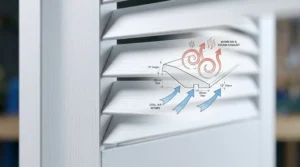
One of the biggest advantages of louvers on doors is improved airflow without mechanical support. This allows natural ventilation between rooms.
They also help reduce humidity levels, especially in closed spaces where moisture can accumulate. Another benefit is improved energy efficiency since better airflow reduces the need for artificial cooling.
In addition, they provide a modern aesthetic appeal that blends well with contemporary interior styles.
Limitations of Louver Doors
While useful, this design does have certain limitations. Privacy levels are lower compared to solid doors due to visible gaps.
Sound insulation is also limited, which makes them less suitable for bedrooms or quiet spaces. In some cases, dust may enter through the slats, requiring regular cleaning.
Security is another consideration, especially for external applications where solid doors perform better.
Louver Doors Compared to Solid Doors
When comparing both designs, solid doors focus on privacy, sound control, and security. In contrast, louver doors prioritize airflow and ventilation.
For areas like bathrooms, kitchens, and storage rooms, louvers on doors are more practical. For bedrooms and entry points, solid doors are generally preferred.
Modern Interior Design Trends
Modern architecture has redefined the use of louvers on doors by introducing stylish variations. Minimalist homes often use light wooden slats for a clean aesthetic.
Industrial designs prefer darker tones and metal finishes, while luxury interiors often use custom patterned slats to enhance visual appeal.
Sustainable architecture also promotes this design because it supports natural airflow and reduces energy consumption.
Are Louver Doors Still Relevant Today?
Despite modern alternatives, louvers on doors continue to remain widely used in both residential and commercial projects. Their ability to combine functionality with design ensures long-term relevance in interior architecture.
Instead of becoming outdated, they have evolved into more refined and stylish versions that suit modern homes.
Maintenance Guidelines
Proper care ensures long-term durability. Regular cleaning of slats helps prevent dust accumulation. Wooden versions should be treated to resist moisture damage.
Aluminum and PVC versions require less maintenance but still benefit from occasional cleaning to maintain airflow efficiency.
Buying Considerations
When selecting louvers on doors, it is important to consider the environment where they will be installed. Humid areas require moisture-resistant materials, while living spaces may prioritize aesthetics.
Budget, durability, and design compatibility should also be evaluated before making a final decision.
FAQs
Why are louvers used in doors?
They are used to improve airflow and reduce humidity inside rooms.
Are louver doors suitable for bathrooms?
Yes, they are highly effective in moisture control.
Do they reduce privacy?
Yes, they provide less privacy compared to solid doors.
What is the difference between true and false louvers?
True louvers allow airflow, while false louvers are only decorative.
Conclusion
The use of louvers on doors remains an important part of modern interior and architectural design. Their ability to improve airflow, control humidity, and enhance aesthetics makes them a practical choice for many spaces. Whether in homes or commercial environments, they continue to offer a balance between functionality and style.

Leave a Reply