
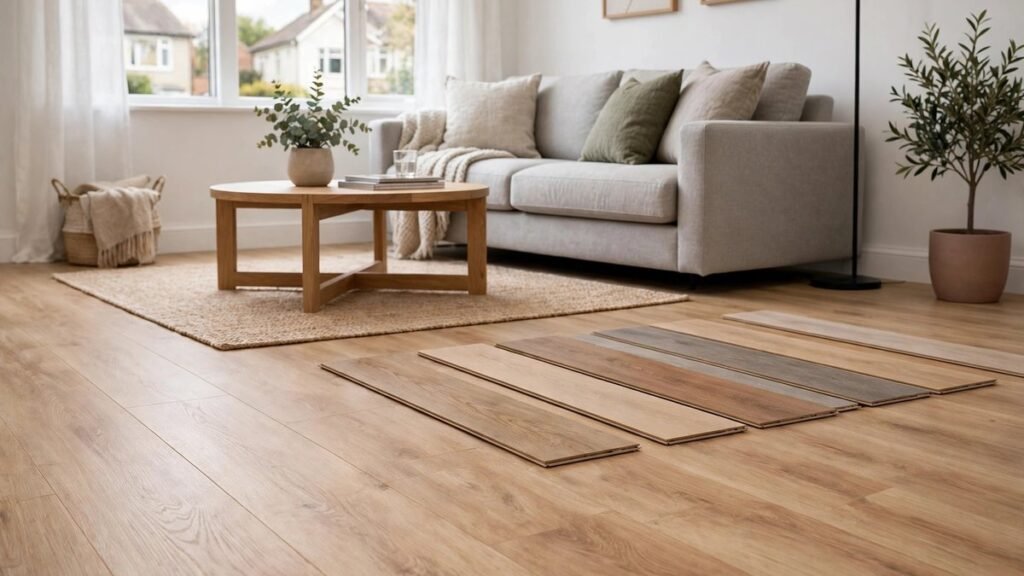
Choosing a new floor is one of the biggest decisions in a UK home renovation. The floor you walk on every day affects how warm a room feels, how much noise travels between floors, how easy cleaning is, and how much your home is worth when you sell. Two of the most popular choices for living rooms, bedrooms and hallways are laminate flooring and engineered wood flooring. They can look strikingly similar in a showroom, but they are made in very different ways, they cost different amounts, and they behave differently over time. This guide compares them honestly, with UK costs in pounds, so you can choose the right one for your home, your budget and your household.
What Is Laminate Flooring?
Laminate flooring is a man-made product built from layers pressed together under high pressure. The top layer is a clear, hard-wearing wear layer printed with a photograph of wood, stone or tile. Below that is a high-density fibreboard core, and beneath that a balancing layer that keeps the board flat. Modern laminate planks are usually 8 mm to 12 mm thick and they click together as a floating floor, which means they are not glued or nailed to the subfloor. Quality has improved a great deal in the last ten years. Good laminate now has embossed textures that follow the printed grain, bevelled edges that look like real boards, and AC durability ratings from AC3 for light residential use up to AC5 for heavy commercial use. For a busy UK family home, AC4 is a sensible minimum.
What Is Engineered Wood Flooring?
Engineered wood flooring is real wood, but it is built in layers. The top layer, called the wear layer, is a slice of genuine hardwood such as oak, walnut or ash, usually 2.5 mm to 6 mm thick. Underneath are layers of plywood or softwood laid at right angles to each other. This cross-layer construction makes engineered boards much more stable than solid wood when temperature and humidity change, which matters in British homes with central heating and damp winters. Engineered boards are typically 14 mm to 20 mm thick. They can be floated over an underlay, glued down, or nailed to a wooden subfloor. Because the surface is real timber, it can be sanded and refinished once or twice over its life if the wear layer is thick enough.
How They Are Made — And Why It Matters
The difference in construction explains almost every other difference between the two floors. Laminate has a photographic image of wood, so every pack of planks repeats the same few patterns. Engineered wood has a real timber surface, so every board has its own grain, knots and colour variation. That is why engineered wood looks more convincing close up and feels warmer and quieter underfoot, while budget laminate can sound hollow and look repetitive across a large room. It also explains why laminate is so consistent in colour from pack to pack, which can be useful if you need to replace a damaged board or extend a floor later.
Cost Comparison in the UK
Cost is where laminate wins clearly. As a guide for 2026, budget laminate costs roughly £10 to £18 per square metre for materials, mid-range laminate £18 to £30, and premium wide-plank laminate £30 to £45. Engineered oak usually starts at about £35 to £55 per square metre for a 3 mm wear layer, £55 to £85 for a 4 mm to 6 mm wear layer with a wider plank, and £85 or more for wide-plank European oak or walnut. Fitting adds roughly £12 to £20 per square metre for either floor if you use a professional fitter, plus £2 to £5 per square metre for underlay and a damp-proof membrane on ground floors. A typical 20 square metre UK living room might cost £600 to £1,200 supplied and fitted in laminate, against £1,400 to £2,500 in engineered wood. As a rule of thumb, allow 7 to 10 percent extra material for wastage on cuts, and buy one spare pack so you can replace a damaged board in future.
Durability and Everyday Wear
For durability, a good laminate is hard to beat. Its wear layer resists scratches from shoes, pet claws and dragged furniture better than many real wood finishes, and it does not dent as easily. That makes laminate a strong choice for hallways, children’s play areas and homes with large dogs. Engineered wood is tougher than it looks, but a heavy dropped object can dent the timber surface, and grit walked in from the garden can scratch the finish. The trade-off is that a scratched laminate board cannot be repaired — you have to lift and replace the board, which is straightforward with a click-lock floor if you have spare planks. A scratched engineered board can be sanded and refinished, provided the wear layer is at least 3 mm thick, which is one reason to pay for a thicker wear layer.
Water, Moisture and the Right Room
Neither floor is the best choice for a full bathroom or wet room, where porcelain tiles are the safer option. Between the two, laminate has improved a lot: many ranges now carry a water-resistant rating for the top surface and can cope with splashes in a kitchen or utility room if spills are wiped up quickly. Standard laminate will still swell at the joints if water sits on it, so it should not be used in bathrooms or around a leaking appliance. Engineered wood tolerates humidity better than solid wood, but standing water can stain and warp it, and manufacturers usually exclude water damage from the warranty. In a UK kitchen, either floor can work if it is installed properly and spills are dealt with promptly. In a downstairs cloakroom, look for a water-resistant laminate or a vinyl alternative instead.
Installation: What to Expect
Laminate is one of the most DIY-friendly floors. The planks click together over a foam or fibreboard underlay, leaving a 10 mm expansion gap around the edges that is hidden by skirting or beading. A confident DIYer can usually lay a 20 square metre room in a weekend. Engineered wood takes more skill and more time. Glue-down installation gives the most solid, quiet result, but it requires a clean, dry, level subfloor and the glue must cure before the floor is walked on. Before either floor goes down, the subfloor must be dry and level within about 3 mm over 2 metres, and planks should be acclimatised in the room for at least 48 hours. On a ground floor with a concrete slab, a damp-proof membrane is essential.
Look, Feel and Noise
Engineered wood wins on look and feel. Real timber has depth, texture and variation that a photograph cannot fully copy, and it ages gracefully as the wood mellows in sunlight. Laminate looks best in smaller rooms and in mid-tone oaks, where the repeated pattern is less obvious. Noise is worth thinking about in UK homes with timber floors between storeys. Laminate can sound hollow and click underfoot unless you use a good quality acoustic underlay. Engineered wood glued to the subfloor is noticeably quieter. An acoustic underlay of 2 mm to 3 mm helps either floor, and it also adds a little warmth.
Maintenance, Lifespan and Value
Day to day, both floors are easy to look after. Sweep or vacuum with a hard-floor head, and mop with a well-wrung mop and a cleaner made for your floor type. Never use a steam mop on laminate, and avoid soaking engineered wood. Laminate usually lasts 15 to 25 years in a family home, and the warranty often reflects that. Engineered wood can last 30 to 50 years or more, and can be refinished to look new again, which is why buyers and estate agents often view it as a premium feature. For resale value, a real wood floor is a genuine selling point in a UK home, particularly in period properties and higher-value streets.
Which Floor Should You Choose?
Choose laminate if your budget is tight, the room gets heavy traffic, you have pets or young children, you want to install it yourself, or you plan to change the floor again within ten to fifteen years. It is a sensible, practical choice for hallways, bedrooms, playrooms and rental properties. Choose engineered wood if you want the authentic look and feel of real timber, you plan to stay in the home for many years, you are renovating a period home or a higher-value property, or you want a floor you can refinish rather than replace. For bedrooms and living rooms, either works — let your budget and how long you plan to stay decide.
Conclusion
Laminate and engineered wood are not competing to be the same thing. Laminate is a clever, affordable copy that is tough, quick to fit and kind to a budget. Engineered wood is the real thing, with a higher price, a richer look, and a much longer life. If your budget is under £1,000 for a typical living room, laminate fitted well will serve you admirably. If you can stretch to £1,500 or more and want a floor that adds character and value to your home, engineered wood is worth the investment. Whichever you choose, buy a little extra for cuts and spares, check the underlay and moisture protection, and use a fitter who offers a written guarantee on their work.

