


Outdoor cushions add comfort, style, and functionality to any garden space. Whether you have a patio dining set, lounge furniture, or a cozy garden bench, proper care is essential to keep your cushions looking their best. One of the most important aspects of outdoor furniture maintenance is storing garden cushions correctly.
Many homeowners assume weather-resistant cushions can stay outside indefinitely. While some outdoor seating cushions are designed to handle changing weather conditions, prolonged exposure to rain, moisture, sunlight, and humidity can significantly shorten their lifespan. Learning how to store garden cushions properly can help prevent mould, mildew, fading, and fabric damage.
This guide explores the best garden cushion storage solutions, seasonal care tips, and expert recommendations to help you protect your investment throughout the year.
Why Storing Garden Cushions Correctly Is Important
Proper garden cushion storage is about much more than keeping your outdoor area tidy. It directly impacts the condition, appearance, and durability of your cushions.
Preventing Mould and Mildew
Moisture is one of the biggest threats to outdoor cushion storage. Even weatherproof cushion storage methods can fail if cushions are stored while damp. Mould and mildew thrive in humid conditions and can quickly spread through cushion foam and fabric.
Protecting Against Rain and Moisture
Rainwater can penetrate seams and zippers, especially if cushions are left outside for extended periods. Storing outdoor cushions in a dry and ventilated location helps prevent moisture buildup and unpleasant odors.
Avoiding Sun Damage and Fading
Constant exposure to UV rays causes outdoor fabric care concerns such as fading, discoloration, and weakening of materials. Proper cushion protection extends the life of your outdoor furniture cushions.
Extending Cushion Lifespan
Investing in the best way to store garden cushions ensures they remain comfortable, attractive, and functional for many seasons. Good storage habits reduce replacement costs and preserve the quality of your garden furniture cushion storage setup.
What Happens When Garden Cushions Are Stored Incorrectly?
Improper storage can create several problems that affect both appearance and performance.
Dampness and Bad Odours
One of the most common mistakes is storing damp cushions. Moisture trapped inside cushion foam often leads to unpleasant smells that are difficult to remove.
Fabric Deterioration
Outdoor fabrics can weaken over time when exposed to weather damage. Rain, frost, and humidity contribute to fabric deterioration and reduced durability.
Foam Breakdown
When cushions absorb moisture repeatedly, the internal foam begins to lose shape and support. This can make even expensive cushions uncomfortable.
Pest and Insect Problems
Poorly maintained storage areas may attract insects, spiders, and rodents. Garden cushion storage ideas should always include clean and secure storage spaces to reduce pest issues.
Preparing Garden Cushions Before Storage
Before placing cushions into storage boxes, sheds, or garages, preparation is essential.
Cleaning Outdoor Cushions Properly
Start by removing dirt, leaves, and debris from the surface. Use a mild soap solution and a soft brush to clean stains. Proper cushion care helps prevent long-term damage.
Removing Dirt and Debris
Dust and debris trapped within fabric folds can attract moisture and pests. Thorough cleaning contributes to effective seasonal cushion storage.
Checking for Damage
Inspect seams, zippers, and fabric surfaces for tears or wear. Addressing small issues before storage prevents them from worsening over time.
Drying Cushions Completely
One of the most important rules when storing garden cushions is ensuring they are fully dry. Even slight dampness can encourage mould growth during storage.
Best Places for Storing Garden Cushions
Choosing the right location plays a major role in protecting cushions throughout the year.
Storage Boxes
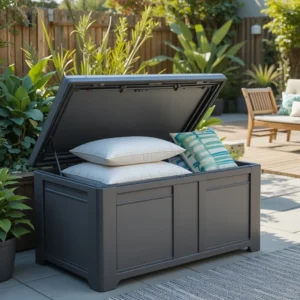
A garden storage box is one of the most popular storage solutions. Waterproof storage boxes for garden cushions provide protection from rain while keeping cushions organized.
Garden Sheds
Storing garden cushions in a shed offers excellent protection from weather conditions. Ensure the shed has adequate airflow to minimize humidity.
Garages
Many homeowners prefer storing garden cushions in a garage because it provides a dry and secure environment.
Utility Rooms
Indoor storage options such as utility rooms provide excellent temperature control and protection from moisture.
Conservatories
A conservatory offers convenient access while protecting outdoor seating cushions from rain and harsh weather.
Indoor Cupboards
If space allows, indoor cupboards can serve as an ideal location for storing outdoor cushions during winter.
Indoor vs Outdoor Cushion Storage
Many people wonder where to store garden cushions for maximum protection.
Advantages of Indoor Storage
Indoor storage provides stable temperatures, lower humidity levels, and better protection from weather damage. It is generally considered the safest option.
Advantages of Outdoor Storage
Outdoor storage can be practical when using high-quality storage boxes, deck box storage solutions, or weatherproof furniture storage systems.
Which Option Is Better?
For long-term storage, indoor storage typically offers superior protection. However, quality outdoor cushion storage solutions can work effectively when proper ventilation is maintained.
How to Store Garden Cushions During Winter
Winter storage for garden cushions requires extra attention because of increased moisture and colder temperatures.
Winter Storage Checklist
Clean cushions thoroughly.
Allow cushions to dry completely.
Inspect for damage.
Store in a dry location.
Use breathable storage bags for cushions.
Protecting Cushions from Frost
Frost can affect fabric flexibility and foam quality. Bringing cushions indoors whenever possible provides added protection.
Reducing Moisture Build-Up
Ventilation is essential when storing outdoor cushions during winter. Avoid airtight containers that trap humidity.
How to Store Garden Cushions During Summer
Many people focus on winter storage while overlooking summer risks.
Managing UV Exposure
Strong sunlight can fade fabrics and weaken fibres. Store cushions when not in use to reduce UV damage.
Protecting Against Sudden Rainstorms
Summer weather can be unpredictable. Quick access to waterproof cushion storage helps prevent water damage.
Preventing Colour Fading
Using covers and rotating cushions regularly can help preserve vibrant colors.

Best Storage Solutions for Different Cushion Types
Different cushions benefit from tailored storage approaches.
Bench Cushions
Store flat whenever possible to maintain shape.
Lounge Cushions
Use large storage containers with adequate airflow.
Deep Seat Cushions
Avoid stacking heavy items on top to prevent compression.
Dining Chair Cushions
Compact storage bags can work well for smaller cushions.
Common Garden Cushion Storage Mistakes to Avoid
Avoiding these mistakes can significantly improve cushion lifespan.
Storing Damp Cushions
Always ensure cushions are dry before storage.
Using Non-Breathable Containers
Poor airflow increases the risk of mould and mildew.
Forgetting Regular Inspections
Check stored cushions periodically for signs of moisture or pests.
Overcrowding Storage Boxes
Overpacked storage boxes restrict airflow and increase humidity.
How to Prevent Mould, Mildew, and Unpleasant Odours
Improving Airflow
Choose storage containers with ventilation features.
Managing Humidity Levels
Consider moisture absorbers in enclosed storage areas.
Choosing Breathable Storage Options
Breathable storage bags help maintain airflow while protecting cushions from dust.
Protecting Garden Cushions from Pests and Insects
Preventing Wasp Nests
Inspect storage areas regularly and remove debris.
Avoiding Rodent Damage
Keep food sources away from storage spaces.
Keeping Storage Areas Clean
Routine cleaning reduces the likelihood of infestations.
Seasonal Garden Cushion Maintenance Calendar
Spring Tasks
Inspect cushions and clean away winter dust.
Summer Tasks
Protect cushions from prolonged sun exposure.
Autumn Tasks
Prepare cushions for colder weather and increased rainfall.
Winter Tasks
Store cushions safely and monitor for moisture buildup.
Frequently Asked Questions
Can Garden Cushions Stay Outside All Year?
Weather-resistant cushions can tolerate outdoor conditions, but long-term exposure may reduce their lifespan.
Should Outdoor Cushions Be Stored Indoors?
Indoor storage provides the highest level of protection.
Can You Use Vacuum Storage Bags?
Vacuum bags can save space, but avoid excessive compression for foam-filled cushions.
How Often Should Cushions Be Cleaned?
At least twice a year, with additional cleaning as needed.
What Is the Best Storage Box for Cushions?
Look for durable, weather-resistant storage boxes with proper ventilation.
Final Thoughts
Properly storing garden cushions is one of the easiest ways to protect your outdoor living investment. By cleaning, drying, and storing cushions in suitable conditions, you can prevent mould, reduce weather damage, and extend their lifespan. Whether you choose a garden storage box, shed, garage, or indoor cupboard, following these best practices will keep your cushions fresh, comfortable, and ready for use throughout every season.





Leave a Reply