

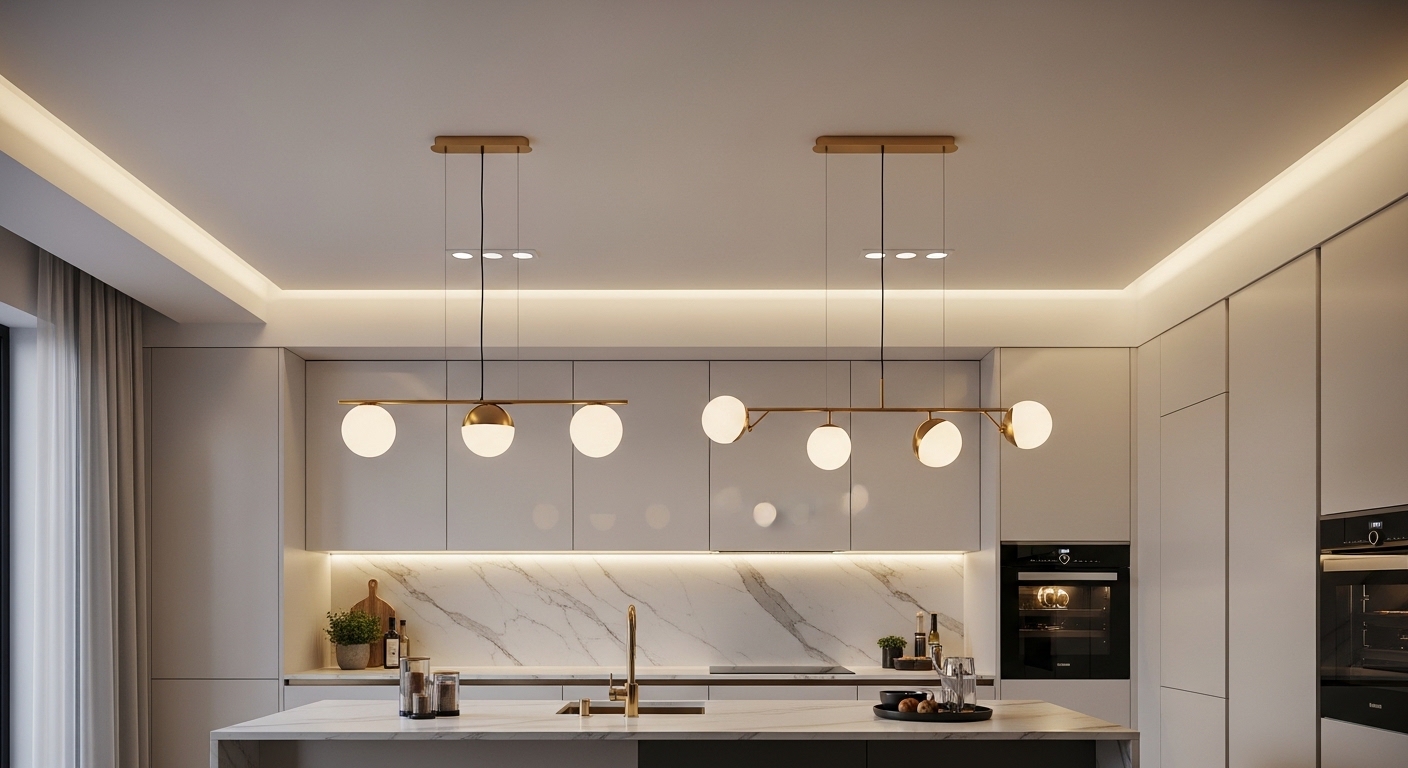
Modern homes are no longer just about cooking spaces. They are lifestyle hubs where families gather, guests are entertained, and daily routines happen. This is why kitchen ceiling lights have become a core element of interior design rather than just a practical necessity.
The right lighting improves visibility, enhances safety while cooking, and transforms the overall mood of your kitchen. Whether you are designing a new space or upgrading an old one, choosing the right kitchen ceiling lighting can completely change how your kitchen feels and functions.
Today’s trends focus on layered lighting, energy efficiency, and aesthetic appeal. From minimalist apartments to luxury open-plan kitchens, lighting plays a defining role in modern home design.
Types of Kitchen Ceiling Lights (Complete Breakdown)
Choosing the right style starts with understanding the available options.
Flush Mount Ceiling Lights
These are close to the ceiling and perfect for low-height kitchens. They provide even brightness and a clean look, making them ideal for small spaces.
Semi Flush Ceiling Lights
A slightly extended version that adds a decorative touch while maintaining practicality.
Pendant Lighting for Kitchen Islands
Pendant lights are widely used over kitchen islands and dining counters. They add personality and create a focal point in the room.
Recessed LED Lighting
Built into the ceiling, these lights offer a modern and minimal appearance. They are often used for task lighting in cooking zones.
Track Lighting Systems
Flexible and adjustable, track lighting allows you to direct light where needed most.
Smart LED Ceiling Panels
A modern solution for energy-efficient homes, offering adjustable brightness and smart control features. This category is becoming one of the fastest-growing trends in kitchen ceiling lighting design.
Best Kitchen Ceiling Lights by Kitchen Type (Missing Modern Insight)
Different kitchens require different lighting approaches.
Small Kitchen Lighting Solutions
For compact kitchens, flush-mount lights or LED panels work best. They reduce shadows and make the space feel larger.
Open Plan Kitchen Lighting Design
Layered lighting works best here, combining pendant lights with recessed lighting for balanced illumination.
High Ceiling Kitchen Lighting Ideas
Long pendant lights or chandelier-style fixtures help fill vertical space effectively.
Low Ceiling Kitchen Lighting Fixes
Flush-mount or recessed lighting prevents overcrowding and maintains clearance.
Apartment Kitchen Lighting Setup
Energy-efficient LED fixtures are ideal due to limited space and utility savings.
How to Choose the Right Kitchen Ceiling Lights
Selecting the right lighting involves more than just design preference.
Brightness is measured in lumens and should match the size of your kitchen. Larger kitchens require higher brightness levels for proper visibility.
Color temperature also matters. Warm lighting creates a cozy feel while cool lighting improves focus during cooking tasks.
Ceiling height determines fixture type. Low ceilings require compact designs, while high ceilings allow decorative fixtures.
Energy efficiency is another important factor. LED-based kitchen ceiling lights are now the standard due to their long lifespan and low electricity consumption.
Proper placement ensures that cooking areas, countertops, and sinks are well-lit without shadows.
Kitchen Lighting Layering Strategy (Expert Level Design)
Professional designers never rely on a single light source.
Ambient Lighting
Provides overall brightness across the kitchen.
Task Lighting
Focused lighting for cooking, chopping, and preparation areas.
Accent Lighting
Used to highlight design elements such as cabinets or islands.
A well-designed kitchen combines all three layers to achieve both functionality and beauty. This layered approach is essential in modern kitchen ceiling lighting design.
Modern Kitchen Lighting Trends 2026
Interior design trends are evolving quickly, and lighting is no exception.
Minimalist lighting designs are gaining popularity with hidden LED strips and clean fixtures.
Smart home integration is also growing, allowing users to control brightness and color temperature through mobile apps or voice assistants.
Invisible LED panels are being used in luxury kitchens for a seamless ceiling look.
Matte black fixtures and metallic finishes are trending in modern interior design.
Statement pendant lights are still popular for adding character and elegance to kitchen spaces.
Best Kitchen Ceiling Lights by Budget
Lighting solutions are available for every budget range. Budget-friendly options include basic LED flush mount fixtures that provide strong brightness at a low cost.
Mid-range options offer stylish designs with improved materials and dimmable features.
Luxury lighting includes designer pendant systems and smart lighting setups that combine technology with aesthetics.
Installation Guide for Kitchen Ceiling Lights
Proper installation ensures both safety and performance.
DIY installation is possible for basic fixtures, but complex wiring should always be handled by professionals.
Understanding wiring basics helps prevent common electrical issues.
Avoid mistakes such as improper placement, uneven lighting distribution, and incorrect fixture sizing.
Safety should always be a priority when installing any kitchen lighting system.
Energy Efficiency and Smart Lighting Controls
Modern kitchens are shifting toward sustainable solutions.
LED lighting consumes significantly less electricity compared to traditional bulbs.
Motion sensor lights automatically turn on and off, reducing energy waste.
Dimmable controls allow users to adjust brightness based on activity.
Smart systems integrated with home assistants offer full control over kitchen ceiling lights, improving convenience and efficiency.
Common Mistakes to Avoid in Kitchen Lighting Design
Many homeowners make avoidable mistakes when choosing lighting.
Overlighting or underlighting can create discomfort and reduce functionality.
Using the wrong color temperature may affect cooking accuracy and mood.
Poor placement leads to shadows on countertops.
Ignoring lighting zones often results in uneven brightness across the kitchen.
FAQs About Kitchen Ceiling Lights
What type of ceiling light is best for a kitchen?
LED flush mount or recessed lighting is often the best choice due to efficiency and brightness.
How many kitchen ceiling lights do I need?
It depends on the kitchen size, layout, and lighting layers required.
Are LED lights good for kitchens?
Yes, they are energy efficient, long-lasting, and provide excellent brightness.
What brightness is ideal for kitchens?
Typically between 3000 and 5000 lumens,s depending on space size.
Conclusion: Creating the Perfect Kitchen Lighting Setup
Choosing the right kitchen ceiling lights is about balancing functionality and style. Well-planned lighting system enhances cooking efficiency, improves safety, and elevates the overall design of your kitchen.
By combining different lighting types, using smart technology, and focusing on layered illumination, you can create a modern kitchen that is both practical and visually stunning.

Leave a Reply