


Most homeowners only think about protection when something breaks. A leaking pipe, a failed air conditioner, or a broken refrigerator can quickly turn into an expensive emergency. This is where home warranty services enter the picture. Among the many providers in the market, the Liberty Home Guard home warranty has become a widely discussed option due to its flexible coverage structure and customizable add-ons. But popularity does not always mean suitability.
This article takes a practical, experience-based approach to help you understand how this warranty actually works in real situations, what you are likely to pay, and whether it genuinely adds value compared to other home warranty companies.
Understanding the Core Idea Behind Home Warranty Protection
Before focusing on any specific company, it is important to understand what a home warranty actually does.
A home warranty is not insurance. Instead, it is a service contract that helps cover repair or replacement costs for home systems and appliances that fail due to normal wear and tear.
The idea is simple:
- You pay a monthly or yearly fee
- You pay a service fee when something breaks
- The company handles repair or replacement under the contract
In theory, this reduces unexpected financial stress. However, value depends heavily on coverage clarity, claim approval, and service quality.
This is exactly where the Liberty Home Guard home warranty positions itself as a flexible alternative in the industry.

How Liberty Home Guard Works in Real Practice
When you break down the process, it follows a structured path, but real experiences vary depending on the situation.
First, you choose a plan based on your home’s needs. After that, you pay a monthly fee that keeps your coverage active. When something stops working, you submit a service request.
A technician is then assigned to evaluate the issue. If the problem falls within coverage rules, repair or replacement is approved.
On paper, this seems straightforward. In reality, the experience depends on:
- Type of breakdown
- Contract conditions
- Availability of technicians
- Coverage limitations
This is why homeowners often research home warranty cost, service reliability, and claim success rates before choosing a provider.
Plans and Coverage Breakdown in Simple Terms
The structure of home warranty plans is where most confusion happens for buyers. The Liberty Home Guard home warranty offers different levels of protection depending on what you want to cover.
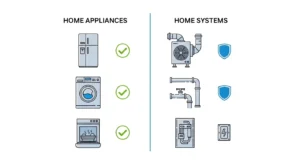
Appliance Coverage Plan
This plan focuses on everyday household items that break frequently over time. These include kitchen and laundry appliances such as refrigerators, ovens, washers, and dryers.
It is often chosen by people who do not want full system protection but still want coverage for expensive appliance repairs.
Systems Coverage Plan
This plan is more focused on the infrastructure inside the home. It covers essential systems like electrical wiring, plumbing networks, HVAC units, and water heaters.
This type of coverage is particularly useful for older homes where system failure risk is higher, and repair costs can be unpredictable.
Comprehensive Home Protection Plan
This option combines both appliance and system coverage into one plan. It is designed for homeowners who want full protection without separating coverage categories.
While it is more expensive, it offers broader peace of mind compared to single-category plans.
Optional Add-On Coverage
One of the most discussed features of Liberty Home Guard is its add-on system. Homeowners can expand their coverage by including:
- Pool and spa systems
- Roof leak protection
- Additional appliance coverage
- Specialty items like pumps or freezers
This flexibility is a key reason why many users compare it when researching home warranty companies.
What Is Covered and What Often Creates Confusion
Coverage is where expectations and reality sometimes differ.
Typically covered items include:
- Major kitchen appliances
- Heating and cooling systems
- Electrical systems
- Plumbing components
However, there are important limitations that many homeowners overlook.
Common exclusions include:
- Problems that existed before coverage started
- Damage caused by poor maintenance
- Incorrect installation issues
- Cosmetic defects that do not affect function
- Items not listed in the contract
Understanding these conditions is essential because most dissatisfaction in the industry comes from misunderstanding contract details rather than service refusal.
Pricing Structure and Real Cost Expectations
The pricing model is not fixed and depends on several variables such as home size, location, and chosen coverage.
Instead of a single flat rate, homeowners typically deal with:
- Monthly subscription fee
- Service fee per claim
- Optional add-on charges
This makes budgeting slightly unpredictable compared to fixed pricing competitors.
When comparing Liberty Home Guard pricing with other home warranty companies, it usually falls in the mid-range category. It is not the cheapest option, but it is also not positioned as a premium-priced provider.
This is why many homeowners evaluate total long-term value rather than just monthly cost.
Claims Process and Real World Experience
The claims process is one of the most important parts of any home warranty service.
When a system or appliance fails, the homeowner submits a request. A technician is then assigned to inspect the issue. After evaluation, the company decides whether the problem is covered.
If approved, repair or replacement is completed based on contract terms.
While the system is structured, real experiences vary because of external factors such as contractor availability and interpretation of coverage rules.
This is why claims satisfaction strongly influences home warranty ratings across the industry.
Pros and Cons Based on Real Market Behavior
Strengths
- Flexible plan customization options
- Wide selection of add-ons
- Coverage for both appliances and systems
- Simple enrollment process
Weak Points
- Pricing can vary significantly between users
- Claim approval consistency is not always uniform
- Coverage exclusions can feel strict in some cases
- Service experience depends on third-party technicians
These patterns are common across many home warranty providers, not just one company.
Customer Experience and Market Reputation
Feedback for the Liberty Home Guard home warranty is mixed, which is normal in this industry.
Positive experiences often highlight convenience, easy setup, and flexibility in choosing coverage. Customers also appreciate having multiple plan options instead of a one-size-fits-all structure.
Negative experiences usually focus on delays in claim processing or misunderstandings related to coverage limitations.
When comparing home warranty ratings, it is important to look at overall trends instead of isolated reviews.
Comparison With Other Home Warranty Providers
When placed against competitors, Liberty Home Guard stands out mainly for customization rather than pricing simplicity.
Other home warranty companies often offer fixed packages with predictable pricing structures, while this provider focuses more on flexible configurations.
This makes it appealing for homeowners who want tailored coverage but less attractive for those who prefer simple, all-inclusive plans.
Who This Service Is Best For
This type of home warranty is generally better suited for:
- Homeowners with older appliances
- People who want flexible protection options
- Landlords managing rental properties
It may not be ideal for:
- Users who want fixed pricing
- Homeowners expecting fast, guaranteed approvals
- People who prefer simple coverage models
Choosing the right plan depends heavily on home condition and financial preference.
Final Evaluation
After analyzing coverage structure, pricing behavior, claims process, and customer feedback, the Liberty Home Guard home warranty presents itself as a flexible and mid-tier home protection option.
It is not positioned as the cheapest or the most premium provider, but rather as a customizable service that allows users to adjust coverage according to their needs. For homeowners who value flexibility and broader coverage options, it can be a reasonable choice in 2026. However, those who prioritize predictable pricing and highly consistent claim outcomes may want to compare alternatives before deciding.




Leave a Reply