

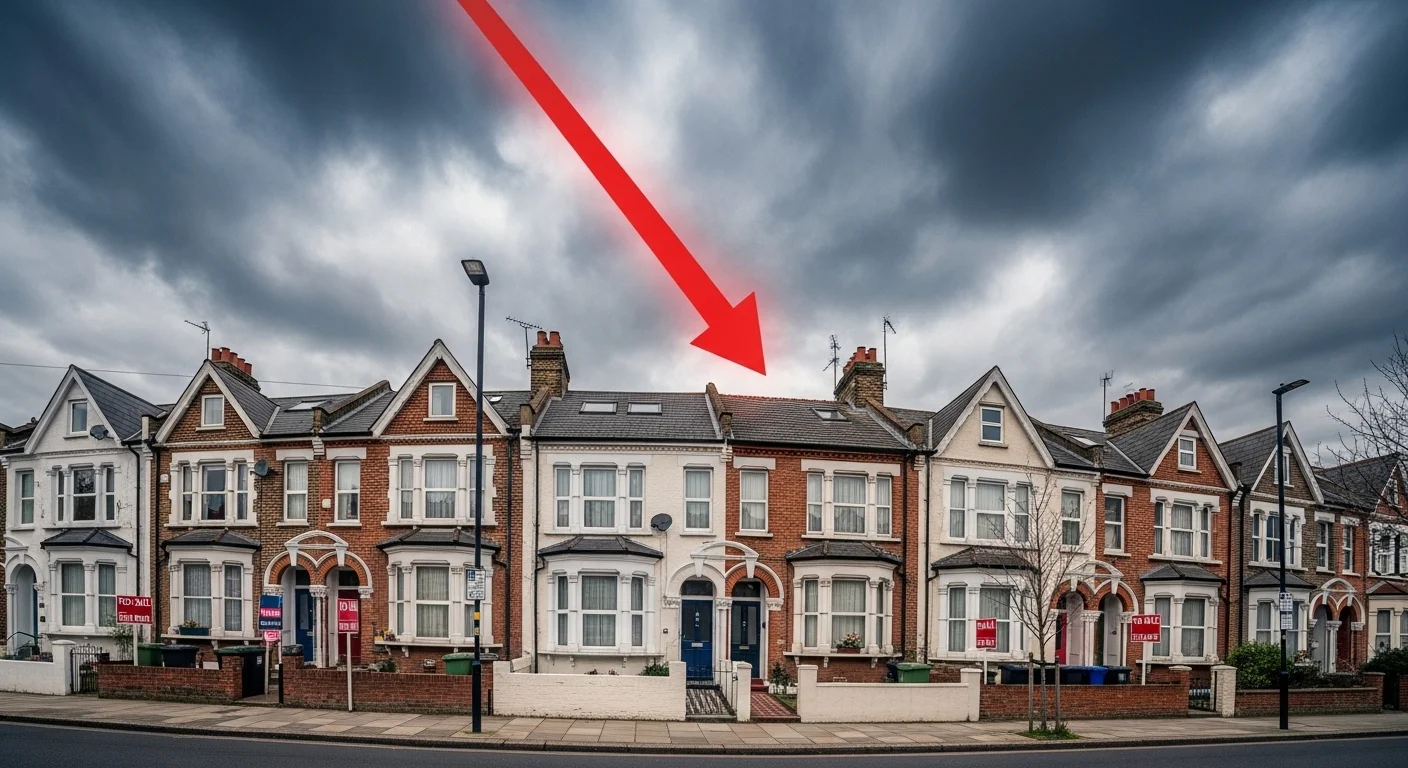
The UK housing market is going through a noticeable shift in 2026, as UK house prices fall across several regions. After years of steady growth, the market is now adjusting due to rising mortgage rates, economic pressure, and changing buyer behavior.
Recent data shows that house prices in the UK have experienced both monthly and annual fluctuations, with some areas seeing sharper declines than others. Buyer demand has slowed, property listings are staying on the market longer, and affordability challenges are reshaping the entire landscape.
For anyone involved in the property market, whether buyers, sellers, or investors, understanding why this trend is happening and what comes next is essential.
Latest UK Housing Market Data and Statistics
To fully understand why UK house prices fall, it is important to look at the latest housing market data. Current reports indicate that buyer enquiries have dropped significantly, in some cases by more than 10 percent compared to the previous year. This decline reflects reduced confidence and tighter borrowing conditions.
At the same time, mortgage rates in the UK have increased, making it more expensive for buyers to secure financing. This has directly impacted housing demand, as fewer people can afford higher monthly repayments.
Regional differences are also becoming more visible. London house prices fall faster than in many other areas, especially in the high-value property segment. In contrast, some northern regions are showing more stability due to relatively lower property prices.
Another important trend is the difference between property types. Flats have seen a greater decline in value compared to detached houses, highlighting a shift in buyer preferences toward larger living spaces.

Why Are UK House Prices Falling
Understanding the reasons behind this trend is crucial for both readers and search engines. Several key factors are driving the decline in UK property prices.
Rising Mortgage Rates and Affordability
One of the biggest reasons why UK house prices fall is the increase in mortgage rates. As interest rates rise, borrowing becomes more expensive. This reduces affordability for many buyers and limits their purchasing power.
Higher mortgage costs mean that even buyers who were previously eligible for loans may now be priced out of the market. As a result, housing demand drops, leading to downward pressure on property prices UK.
Economic Uncertainty and Inflation
Economic uncertainty plays a major role in shaping the housing market. Inflation has increased the cost of living, leaving households with less disposable income. This makes it harder for people to commit to large financial decisions like buying a home.
When people feel uncertain about their financial future, they tend to delay property purchases. This reduced demand directly contributes to the housing market slowdown.
Declining Buyer Demand
Buyer demand UK has decreased significantly in recent months. Reports show fewer property searches, fewer viewings, and fewer completed transactions.
This decline is not just due to affordability but also due to changing buyer psychology. Many potential buyers are adopting a wait-and-see approach, hoping that property prices will drop further.
Global and Political Factors
Global events and political instability can also impact the housing market. Factors such as international conflicts, economic disruptions, and policy changes can influence interest rates, inflation, and investor confidence.
These broader influences create uncertainty, which often leads to reduced activity in the UK housing market.
Regional Breakdown: Where Prices Are Falling the Most
The impact of falling house prices is not the same across the UK. Some regions are experiencing sharper declines than others.
London remains the most affected area. High property values combined with reduced demand have led to noticeable price drops. This is especially true for apartments and luxury properties.
In contrast, regions in the North and Midlands are showing more resilience. Property prices in these areas are relatively lower, making them more attractive to buyers even during uncertain times.
This regional variation highlights the importance of location when analyzing UK real estate trends. It also presents opportunities for buyers looking to enter the market in more affordable areas.
Will UK House Prices Fall Further in 2026
A common question among buyers and investors is whether prices will continue to decline. While it is difficult to predict exact outcomes, current indicators suggest that the market may remain uncertain in the short term.
Experts believe that if mortgage rates stabilize or decrease, the housing market could begin to recover. However, if economic challenges persist, UK house prices will fall further before reaching a stable point.
Forecasts for 2026 show a mixed outlook. Some analysts expect slight growth in certain regions, while others predict continued declines in high-value markets.
What Falling House Prices Mean for Buyers
For buyers, a declining market can present both opportunities and challenges.
On the positive side, lower property prices mean improved affordability. Buyers may find better deals and have stronger negotiation power. This is especially beneficial for first-time buyers entering the market.
However, there are also risks. If prices continue to fall after a purchase, buyers could face negative equity. This occurs when the value of a property drops below the amount borrowed on the mortgage.
Despite these risks, many experts believe that buyers who plan for the long term can benefit from current market conditions.
What It Means for Sellers and Investors
Sellers face a different set of challenges in a falling market. Properties may take longer to sell, and achieving the desired price can be more difficult.
To succeed in this environment, sellers need to price their properties competitively and be prepared for negotiation. Presentation and marketing also play a crucial role in attracting buyers.
For investors, the situation is more complex. While falling prices can create buying opportunities, rental yields and market stability must also be considered. The buy-to-let market in the UK is evolving, and investors need to adapt their strategies accordingly.

Supply and Demand Imbalance in the UK Housing Market
A key factor influencing the market is the balance between supply and demand. Currently, there is a mismatch in many areas.
In some regions, there is an oversupply of properties combined with reduced buyer demand. This leads to longer selling times and downward pressure on prices.
In other areas, limited housing supply continues to support property values. Understanding this dynamic is essential for anyone analyzing the UK housing market trends.
Property Types Analysis: Flats vs Houses
Not all properties are affected equally when UK house prices fall.
Flats have been more heavily impacted due to lower demand and changing lifestyle preferences. Many buyers now prefer houses with more space, especially after recent shifts in work and living patterns.
Detached and semi-detached houses have shown greater resilience. These properties are often seen as long-term investments, making them less sensitive to short-term market changes.
Should You Buy Now or Wait
This is one of the most important questions for potential buyers. The answer depends on individual circumstances.
Buying now can be beneficial for those who find a good deal and plan to stay in the property for several years. Lower prices and reduced competition can create favorable conditions.
Waiting may be a better option for those concerned about further price declines or rising interest rates. Monitoring market trends and financial conditions can help in making an informed decision.
UK Housing Market Trends to Watch
Looking ahead, several key trends will shape the future of the market.
Interest rates will continue to play a major role. Any changes by the Bank of England will directly impact mortgage affordability and housing demand.
Government policies related to housing, taxation, and lending will also influence the market. These decisions can either support or slow down market recovery.
Another important trend is the shift in buyer preferences. Demand for larger homes, suburban areas, and flexible living spaces is expected to continue.
Is the UK Heading Toward a Housing Crash
There is an ongoing debate about whether the current situation could lead to a housing crash. While some fear a sharp decline, most experts believe the market is experiencing a correction rather than a crash.
Unlike the 2008 financial crisis, the current market is supported by stronger lending regulations and better financial stability. This reduces the likelihood of a severe downturn.
However, continued monitoring of economic conditions is essential to understand future risks.
UK House Price Forecast 2026 and Beyond
Looking beyond 2026, the UK property market is expected to stabilize gradually. While short term fluctuations may continue, long-term trends suggest moderate growth.
Factors such as population growth, housing demand, and economic recovery will support the market over time.
For investors and homeowners, this means focusing on long term value rather than short term price changes.
Conclusion: Opportunity or Challenge
The current market conditions present both opportunities and challenges. As UK house prices fall, buyers may find better entry points, while sellers need to adjust their expectations.
Understanding the causes, trends, and forecasts is key to making informed decisions. Whether you are buying, selling, or investing, staying informed about the UK housing market will help you navigate this changing landscape with confidence.
FAQs
Why are UK house prices falling
UK house prices are falling due to rising mortgage rates, reduced buyer demand, and economic uncertainty.
Will UK house prices fall further?
It is possible that prices may decline further in some regions, depending on interest rates and market conditions.
Is 2026 a good time to buy property in the UK
For long-term buyers, 2026 can offer opportunities due to lower prices and reduced competition.
Are house prices falling in London?
Yes, London has experienced some of the largest declines, particularly in high-value and apartment markets.




Leave a Reply