

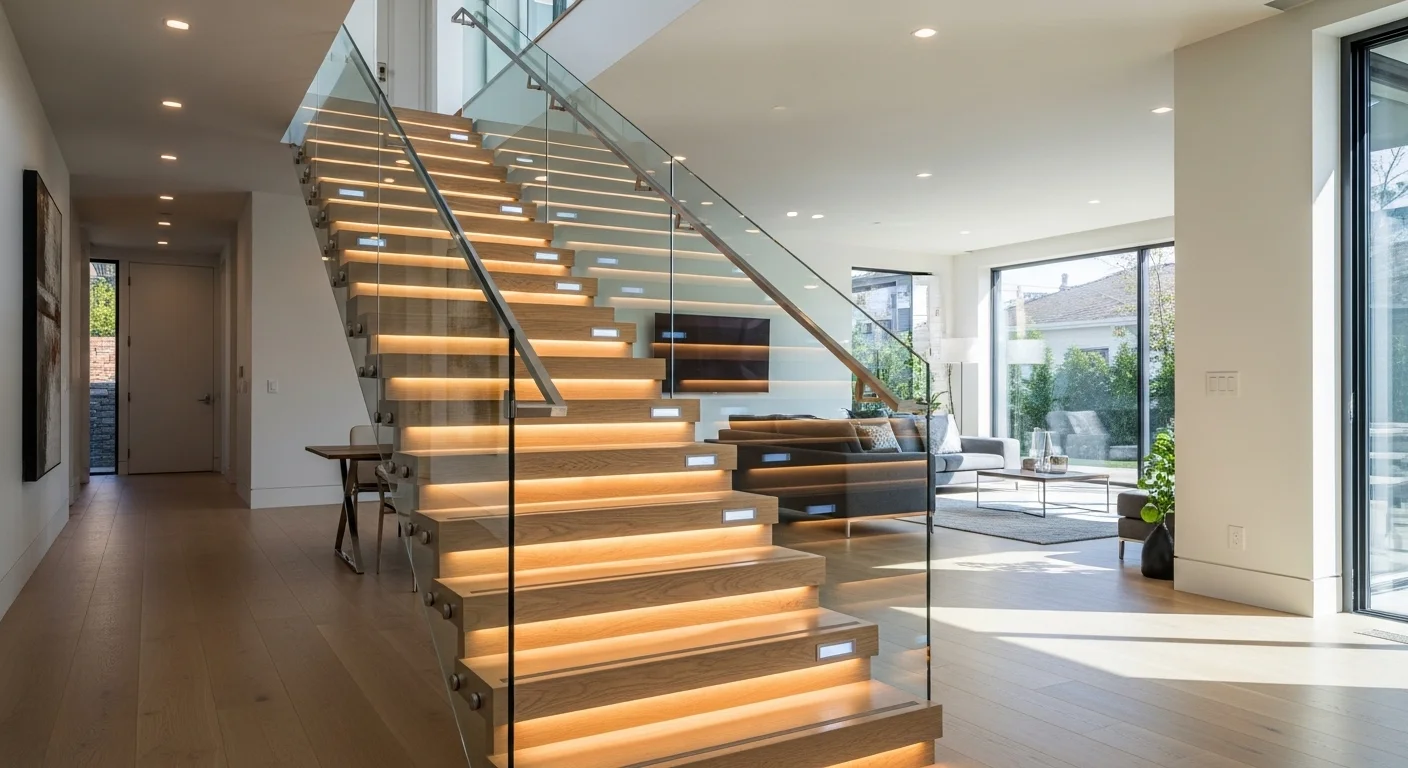
In modern architecture, staircases are no longer just a functional structure that connects floors. They have become a central part of interior aesthetics, space optimization, and smart home innovation. The concept of smart stair design is transforming how homeowners think about vertical space in both small houses and luxury villas.
Today’s staircase designs combine creativity, engineering, and technology to deliver both beauty and functionality. Whether it is a compact home or a large residence, smart stair design plays a key role in maximizing space, improving safety, and enhancing visual appeal.
Homeowners increasingly prefer staircase design ideas that integrate storage, lighting, and modern materials, making stairs more than just a passage between floors.
Key Elements of Smart Stair Design
A successful smart stair design focuses on combining practicality with modern innovation. Several essential elements define this approach.
Space optimization is one of the most important factors, especially in urban homes where every square foot matters. Staircases are designed to minimize space usage while maintaining comfort and safety.
Integrated lighting is another essential feature. LED stair lighting ideas and motion sensor systems are widely used to enhance visibility and create a modern aesthetic.
Multi-functional storage solutions are also a major part of modern staircase design. Under-stair storage ideas, hidden drawers, and modular cabinets help utilize unused space efficiently.
Safety enhancements, such as anti-slip surfaces and child-friendly railings, are also critical in smart stair design. These features ensure that functionality does not compromise safety.
Finally, smart home integration is becoming increasingly popular. Staircases now include automated lighting systems and IoT-based controls that connect with home automation systems.
Modern Stair Design Ideas for Stylish Homes
Modern staircase design ideas are heavily influenced by minimalism and architectural creativity. Floating staircases remain one of the most popular choices due to their clean and open appearance.
Contemporary staircase design focuses on simplicity, using materials like glass, steel, and engineered wood to create elegant structures. These designs allow natural light to flow freely, making interiors feel larger and brighter.
Luxury staircase design is also trending in modern homes. These staircases often feature artistic railings, marble finishes, and bold structural elements that create a premium visual impact.
Floating staircase design is especially popular in open concept homes, where visual continuity is important. These designs are often combined with modern stair railing designs to enhance safety without affecting aesthetics.
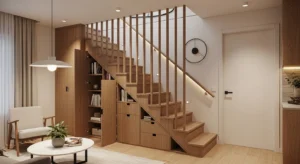
Space Saving Stair Design InnovationsSpace-savingg solutions are essential for small homes and apartments. Compact staircase design helps homeowners utilize vertical space without overcrowding interiors.
Spiral staircase designs are widely used in tight spaces due to their compact footprint. These staircases are both functional and visually appealing.
Foldable and retractable staircase ideas are emerging as innovative solutions in modern architecture. These designs allow stairs to be hidden when not in use, creating flexible living spaces.
Under-stairs storage solutions are also highly effective. Many homeowners use this space for cabinets, bookshelves, or even small office setups.
Small-space stair design has become a major trend in urban housing, where efficient use of space is a top priority.
Smart Technology in Stair Design
The integration of technology has completely transformed staircase design. Smart stair design now includes advanced features that improve convenience, safety, and energy efficiency.
Motion sensor LED stair lighting systems automatically illuminate steps when movement is detected, improving safety during nighttime use.
Voice-controlled stair lighting is becoming a part of smart home ecosystems, allowing users to adjust lighting through voice assistants.
AI-powered stair illumination systems can adjust brightness based on time of day or user activity patterns, making homes more energy efficient.
IoT-enabled staircase systems allow full integration with smart home platforms, enabling centralized control of lighting and safety features.
Automated night mode lighting ensures safe navigation during low-light conditions, especially for children and elderly users.
Storage Integrated Staircase Designs
Storage integration is one of the most practical innovations in modern staircase design. Under-stair cabinets provide hidden storage for household items, reducing clutter in living spaces.
Modular storage staircase systems allow homeowners to customize storage according to their needs. These systems are especially useful in compact homes.
Hidden pantry stairs are an innovative concept where staircases double as kitchen storage solutions, combining functionality with creativity.
Multi-purpose staircase furniture design is also gaining popularity, where stairs function as seating areas, bookshelves, or workspaces.
These ideas are particularly useful in smart stair design concepts that focus on maximizing utility without compromising style.
Materials Used in Smart Stair Design
Material selection plays a major role in durability and aesthetics. Wooden staircase design remains popular due to its warmth and natural appeal.
Glass staircase design offers a modern and elegant look, often used in luxury homes to create an open feel.
Metal staircase design is widely used in industrial and contemporary interiors for its strength and minimalistic style.
Tiled staircase design is also common in many homes, offering durability and easy maintenance.
Anti-slip smart surfaces are increasingly used to improve safety, especially in high-traffic areas. Smart coated materials also help enhance durability and reduce maintenance requirements.
Safety Innovations in Modern Staircases
Safety is a critical aspect of staircase design. Modern smart stair design includes several advanced safety features.
AI-based fall detection systems are being developed to enhance safety for elderly users. These systems can alert homeowners in case of accidents.
Anti-slip intelligent surfaces provide better grip, reducing the risk of slipping.
Child-safe railing systems ensure that stairs are secure for younger family members.
Elderly-friendly staircase design focuses on comfort, with optimized step height and an ergonomic structure.
Motion detection safety lighting is also widely used to improve visibility at night.
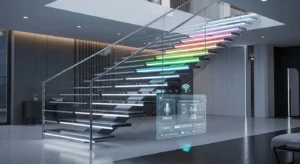
Smart Stair Design Trends for 2026
The future of staircase design is driven by innovation and technology. Smart stair design trends for 2026 focus on automation, sustainability, and aesthetics.
Futuristic floating stair illusions are becoming popular in luxury homes, creating visually stunning interiors.
Adaptive lighting systems that respond to movement and time of day are expected to become standard in modern homes.
Self-cleaning materials and eco-friendly staircase solutions are also gaining attention in sustainable architecture.
Modular staircase systems allow homeowners to redesign stairs according to changing needs.
These innovations are shaping the future of modern interior design.
Cost and Installation Considerations
The cost of staircase design depends on materials, complexity, and technology integration. Basic designs are more affordable, while smart stair design systems with automation and lighting features require a higher investment.
Custom staircase design costs vary based on size and material selection. Glass and metal structures are generally more expensive than wood-based designs.
Lighting and automation systems also add to installation costs but provide long-term energy savings and convenience.
Common Mistakes in Stair Design
Many homeowners make mistakes when planning staircase design. Ignoring space optimization is one of the most common issues.
Poor lighting placement can reduce safety and visual appeal. Overdesigning in small homes often leads to cluttered interiors.
A lack of safety considerations can also create long-term risks. Proper planning is essential for achieving a balanced and functional design.
FAQs About Smart Stair Design
What is smart stair design, and why is it important
Smart stair design combines technology, safety, and space optimization to create functional and modern staircases.
Are smart staircases suitable for small homes?
Yes, they are ideal for small homes due to their space-saving and multifunctional features.
What materials are best for modern staircase design
Wood, glass, and metal are the most commonly used materials, depending on style and durability needs.
Can smart stair systems reduce energy consumption
Yes, LED lighting and automated systems help reduce overall energy usage.
Conclusion
Modern interiors are evolving rapidly, and staircases are no longer just structural elements. With the rise of smart stair design, homeowners now have access to innovative solutions that combine style, technology, and functionality.
From space-saving layouts to intelligent lighting systems and integrated storage solutions, smart stair design continues to redefine modern living spaces. As we move into 2026, these innovations will become even more advanced, shaping the future of residential architecture.
Leave a Reply